
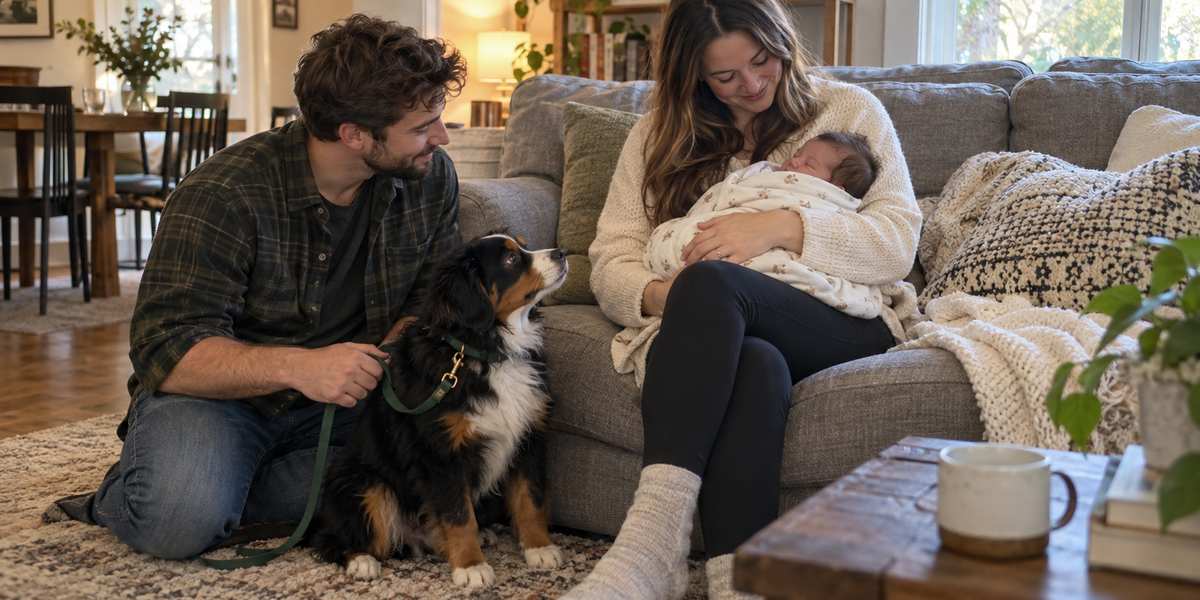
Bringing a new baby home to your dog goes best with gradual preparation in the months before birth, a calm, controlled first introduction, and consistent supervision afterward, since the vast majority of dogs adjust well to a new baby with the right groundwork.
At Love Berners, families expecting their first child often reach out wondering how their Mini Bernese Mountain Dog or Tiny Bernedoodle will handle bringing a new baby home. It is one of the most common life transitions our families go through, and with a little preparation, bringing a new baby home to your dog is usually a much smoother experience than people expect.
Preparing Before the Baby Arrives
Good preparation for bringing a new baby home to your dog starts months before the due date. ASPCA’s guide to dogs and babies recommends starting about four months out, gradually introducing your dog to the new sights, sounds, and smells they will encounter, and pairing those new experiences with rewards so your dog associates them with something positive rather than stress.

Get Comfortable With Baby Gear
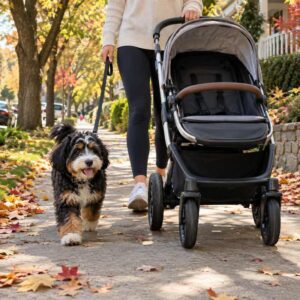
Strollers, swings, and noisy toys can be startling if your dog has never encountered them before. Walking your dog alongside a stroller, even an empty one, well before the baby arrives helps normalize it.
Practice New Sounds
Playing recordings of a crying baby at a low volume, gradually increasing over time, can help desensitize your dog to what is often one of the more jarring new sounds in the house.
Reinforce Basic Obedience
Reliable skills like sit, stay, and settle become genuinely useful once a baby arrives. This is exactly why the foundational behavior training included with every puppy from Love Berners pays off well beyond the puppy stage, alongside the puppy care fundamentals every new family learns.
The First Introduction
When it comes to the actual introduction, VCA Animal Hospitals recommends having one person hold the baby while another manages the dog, ideally on a leash in a sit-stay position, and bringing the baby to the dog rather than allowing the dog to rush toward the baby. The best time for this first meeting is when the dog is calm and the baby is quiet, not during a moment of high energy or noise.
Let Your Dog Investigate Calmly
Allowing your dog to sniff the baby while on leash, then rewarding calm behavior, helps build a positive early association, similar to how we approach crate training as a way to build confidence around new experiences. The American Kennel Club’s guide to introducing your dog to your new baby notes that staying calm yourself matters too, since dogs pick up on anxiety and body language more than we realize.
Bring Home a Familiar Scent First
If possible, having a family member bring home a blanket or hat with the baby’s scent before the baby physically arrives gives your dog a head start on familiarity, a tip echoed by veterinary behavior resources from UC Davis School of Veterinary Medicine.
Life After the Baby Comes Home
Bringing a new baby home to your dog does not end after the first introduction, it is an ongoing adjustment for the whole family.

Never Leave Them Unsupervised Together
This is the single most important rule for bringing a new baby home to your dog, regardless of how gentle or well trained your dog is. The AVMA’s guidance on preventing dog bites is clear that supervision matters for every dog, since even the most trusted family pet can react unpredictably if startled or in discomfort.
Give Your Dog Dedicated Attention
It is easy for a dog’s routine to get overlooked in the exhaustion of new parenthood, but maintaining some one on one time, even in short bursts, helps prevent your dog from feeling pushed aside. Resources from the University of Pennsylvania’s veterinary behavior service suggest setting up safe zones and giving dogs appealing toys during confinement periods so time apart never feels like punishment.
Watch for Signs of Stress
Unusual clinginess, avoidance, or changes in appetite can be signs your dog is struggling with the adjustment that comes from bringing a new baby home to your dog’s world. Reviewing our own guide to signs of stress in dogs can help you catch and address these changes early.
A Note From Our Team
We have talked more than a few nervous new parents through this exact transition, and the pattern we see again and again is that dogs who already have a solid foundation in basic commands and structure tend to adjust far more smoothly than dogs who do not. It is one of many reasons we back every puppy with our health guarantee and stay available for support long after pickup day. Bringing a new baby home to your dog is a big change, but it is one that most families and dogs navigate beautifully with a little patience and preparation, and it is part of why every dog deserves a loving home, and every home deserves a loving dog, baby included.
Frequently Asked Questions
How early should I start preparing my dog for a new baby?
Most experts recommend starting preparation around four months before the due date, gradually introducing new sights, sounds, and routines.
Should I reduce attention to my dog before the baby arrives?
No, dramatically withdrawing attention can create more anxiety. It is better to gradually adjust routines rather than suddenly cutting back on affection.
Is it normal for a dog to be curious or excited around a new baby?
Yes, mild curiosity is completely normal, though it should always be supervised and kept calm rather than overly excited.
Can I ever leave my dog alone with my baby?
No, experts consistently recommend that dogs and babies never be left alone together, regardless of how trusted or gentle the dog is.
What should I do if my dog seems stressed after the baby comes home?
Watch for signs like clinginess, avoidance, or appetite changes, and give your dog extra one on one time and structure, reaching out to your vet if the stress does not improve.