
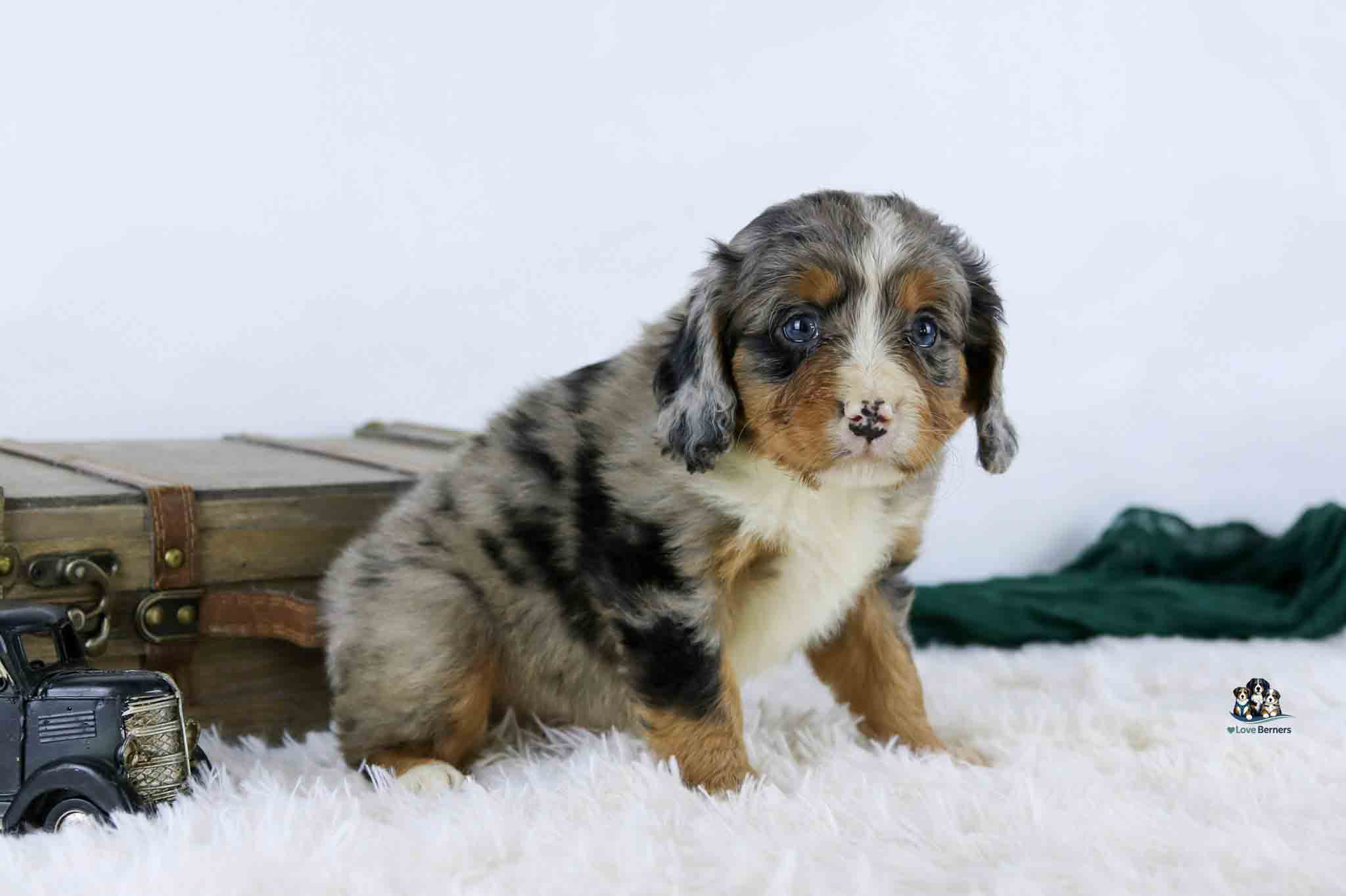
At Love Berners, we believe that every dog deserves a loving home, and every home deserves a loving dog, and that belief shapes how we train. From the very first days of life, every Mini Bernese Mountain Dog and Tiny Bernedoodle puppy in our care is raised using positive reinforcement, never fear or punishment. If you’re getting ready to bring one of our puppies home, this guide walks through what that actually looks like day to day, why it works so well for these breeds, and how you can keep it going once your puppy joins your family.
What Is Positive Reinforcement Training?
Positive reinforcement rewards a puppy immediately after good behavior, using treats, praise, or affection, so that behavior becomes more likely to happen again. Rather than correcting what you don’t want, this approach focuses on catching your puppy doing something right and reinforcing it in the moment. It’s a reward-based method that builds trust between you and your puppy instead of fear.

Why Reward-Based Training Works So Well for These Breeds
Mini Bernese Mountain Dogs and Tiny Bernedoodles are both known for being eager to please and highly people-oriented, which makes them especially responsive to encouragement-based training. These puppies want to connect with their families, and reward-based methods give them a clear, gentle way to understand what earns your approval. Harsh corrections tend to backfire with sensitive, people-focused breeds like these, often creating anxiety instead of good behavior. Force-free training, on the other hand, builds confidence alongside good habits, which sets your puppy up to be a calm, secure adult dog.
How We Use Positive Reinforcement From Day One

This isn’t something we start once a puppy goes home, it begins the moment they’re born. Our foundational training program covers:
- Socialization: exposing puppies to new people, sounds, and environments in a positive, low-pressure way so they grow into well-adjusted, friendly adults
- Crate training: introducing the crate gently and rewarding calm behavior inside it, so puppies see it as a safe space rather than a punishment
- Leash introduction: short, reward-based sessions that teach a puppy to walk calmly rather than pull
- Gentle play: redirecting and rewarding soft mouths and gentle play styles, especially important for families with young children
Every puppy also gets one week of included behavior training with Darrel’s Training, covering crate reinforcement and basic commands like sit, lay down, stay, and name recognition, all taught using reward-based methods.
Our Experience Raising Confident Puppies This Way
We’ve worked with enough litters over the years to know that reward-based training isn’t just a philosophy we put on a page, it’s what actually holds up in practice. A while back, we had a shy Tiny Bernedoodle puppy in a litter who flinched at raised voices and shut down completely whenever anyone tried a firmer correction. Instead of pushing through with more pressure, our team slowed everything down, rewarded the smallest steps of progress, and let her build confidence at her own pace. By the time she went home at eight weeks, she was walking calmly on a leash, responding to her name, and greeting new people with a wagging tail instead of a tucked one.
That puppy is a big part of why we don’t cut corners on this approach, even when it takes longer than a quick correction would. We’ve seen too many training shortcuts leave dogs anxious or shut down instead of genuinely well-behaved, and it’s not a risk we’re willing to take with any puppy that comes through our home.
Techniques You Can Use at Home
Once your puppy comes home, keeping up with this approach is what carries all of that early training forward. A few things that make a real difference:

Timing matters: Reward the behavior within a second or two, so your puppy connects the reward to what they just did, not something else entirely.
Consistency matters more than frequency: Everyone in the household should use the same cues and reward the same behaviors, so your puppy isn’t getting mixed signals.
Keep sessions short: Five to ten minutes of focused training is far more effective than one long session, especially for a young puppy’s attention span.
Save high-value rewards for harder tasks: Use your puppy’s favorite treat for behaviors that are hardest to teach, and lower-value praise for things they already know well.
Fade out the treats gradually: As a behavior becomes reliable, start replacing treats with praise and affection so your puppy isn’t dependent on food forever.
Common Mistakes to Avoid
Even well-intentioned positive reinforcement can go sideways if a few common mistakes creep in. Rewarding too late, after your puppy has already moved on to something else, teaches the wrong lesson entirely. Being inconsistent, allowing a behavior one day and correcting it the next, confuses puppies and slows progress. And relying only on treats without ever building in praise and affection can leave a puppy who only listens when food is visible. None of these are permanent setbacks, they’re just easy adjustments once you know what to look for.
Continuing Training After You Bring Your Puppy Home
Our commitment to this approach doesn’t end at pickup. Every new owner leaves with a take-home training guide covering these same techniques, and our team is always available by phone if questions come up. If you’re interested in going further, we’re happy to point you toward professional trainers who specialize in advanced obedience and agility, all still rooted in reward-based methods. Combined with the health guarantee and ongoing support outlined on our health guarantees page, our goal is for your puppy’s training to feel just as supported as their health from day one.
Frequently Asked Questions
What is positive reinforcement training?
Positive reinforcement rewards a puppy immediately after good behavior, using treats, praise, or affection, to make that behavior more likely to happen again.
Is this training style effective for Bernedoodles and Bernese Mountain Dogs?
Yes, these breeds are people-oriented and eager to please, which makes them especially responsive to reward-based, encouragement-focused training methods.
When does training start for your puppies?
Training begins at birth. Every puppy is raised with socialization, crate training, and gentle play, all built on positive reinforcement from day one.
Do I need treats forever with reward-based training?
No. As behaviors become reliable, you can gradually replace treats with praise and affection, though occasional rewards help maintain strong behaviors long term.
What training is included when I bring my puppy home?
Every puppy includes one week of behavior training with Darrel’s Training, plus a take-home guide so you can continue positive reinforcement at home.
Can this approach fix bad behavior, not just teach new tricks?
Yes. Redirecting a puppy toward the behavior you want and rewarding it works for correcting unwanted habits, not just teaching new commands.
Every dog deserves a loving home, and every home deserves a loving dog, and positive reinforcement is how we make sure that home starts off on the right foot. If you’re ready to welcome a Mini Bernese Mountain Dog or Tiny Bernedoodle raised this way from birth, see our available puppies or reach out with any training questions.