
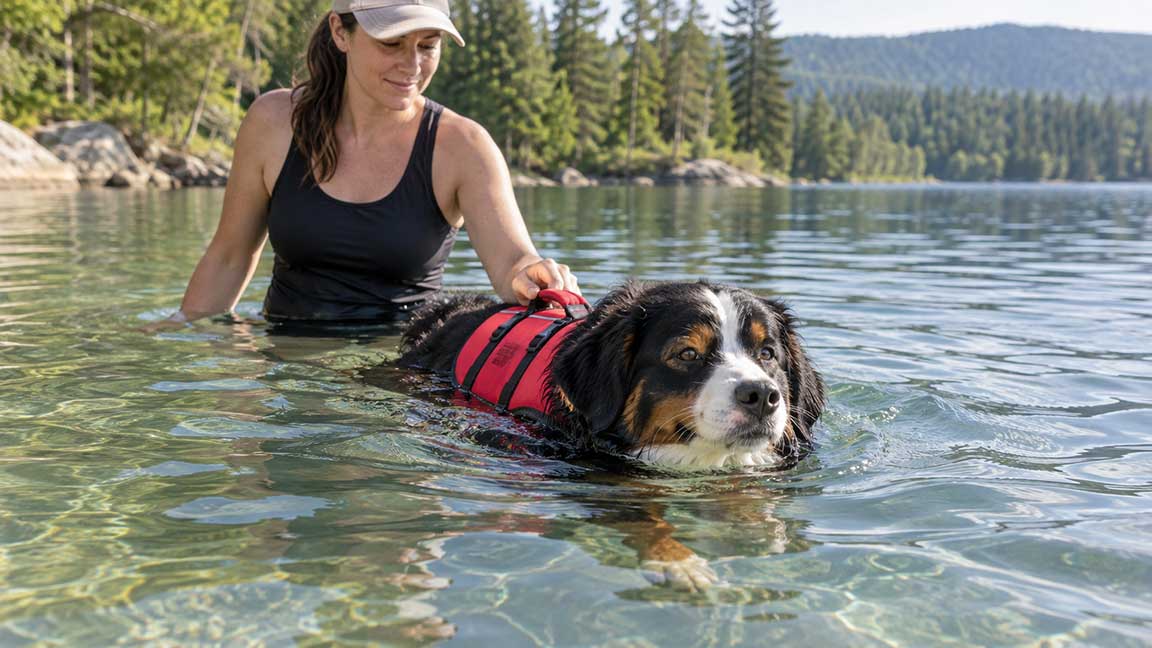
Dog swimming safety means never assuming your dog is a natural swimmer, checking water conditions before letting them in, and always supervising closely, even in shallow water. A properly fitted life jacket, a slow introduction to water, and knowing where the exit points are matter just as much for dogs as they do for people.
At Love Berners, dog swimming safety comes up often once the weather warms up, especially with families who want to bring their Mini Bernese Mountain Dog or Tiny Bernedoodle along on lake trips or backyard pool days. It is easy to assume every dog can swim instinctively, but that is not actually true for every breed or every individual dog. Taking dog swimming safety seriously from the very first dip in the water helps prevent panic, exhaustion, and accidents, and it turns swimming into something your dog can genuinely enjoy rather than something that catches them off guard.
Not Every Dog Is a Natural Swimmer
One of the biggest misconceptions in dog swimming safety is the assumption that all dogs can swim the moment they hit the water. Some breeds, especially those with shorter legs, stockier builds, or flatter faces, struggle far more than others. Even breeds without those traits can simply lack confidence in the water if they were never introduced to it slowly. Good dog swimming safety starts with observing your individual dog’s comfort level rather than assuming ability based on breed alone.
Introducing Your Dog to Water for the First Time
Dog swimming safety begins well before the first swim. Start in shallow water where your dog can stand comfortably, and let them wade in at their own pace rather than picking them up and placing them in deeper water. Getting in the water yourself and staying close builds confidence and makes the experience feel safer for a nervous dog. Rushing this step is one of the most common dog swimming safety mistakes, since a scared first experience can make a dog avoid water altogether afterward. Our puppy training page covers the same slow, positive-exposure approach that works well for introducing water, recall practice, and other new experiences.
Life Jackets Matter More Than People Think
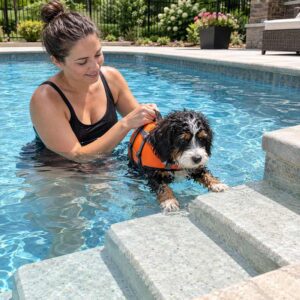
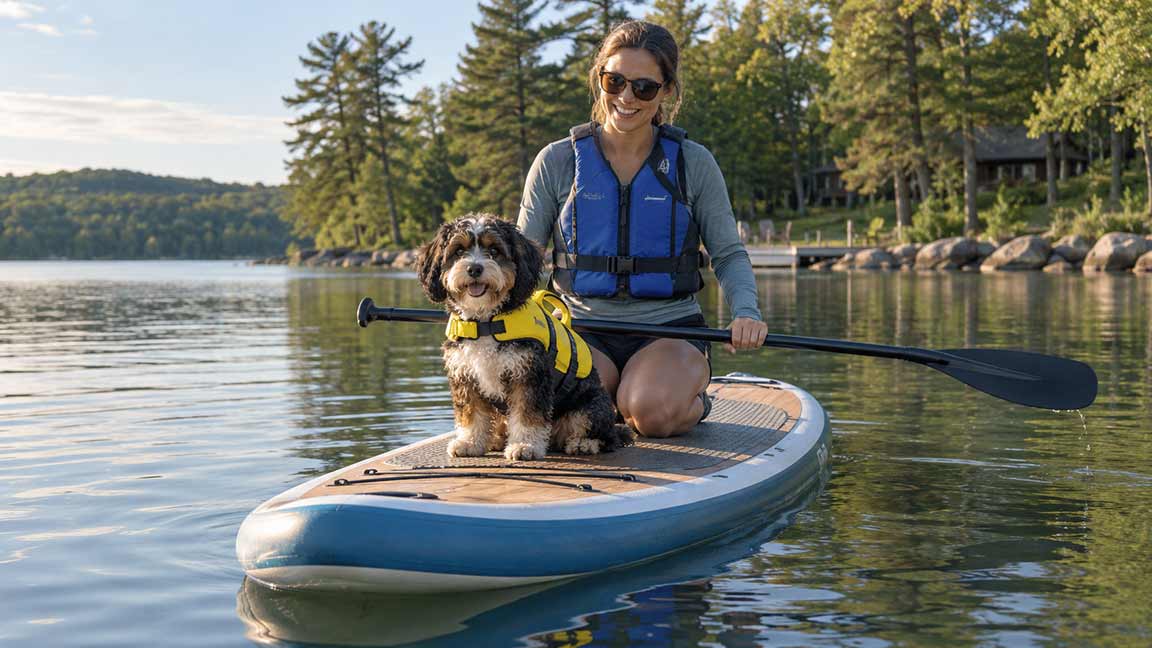
A properly fitted canine life jacket is one of the simplest ways to improve dog swimming safety, even for dogs who seem to swim well. Life jackets help dogs conserve energy, stay visible in open water, and recover more easily if they become tired or disoriented. This matters most in open water like lakes, rivers, or the ocean, where currents and fatigue pose a much bigger risk than they do in a calm backyard pool. Dog swimming safety in a boat or on a paddleboard should always include a life jacket, regardless of how confident your dog seems on land.
Know the Exit Points
Dogs can panic quickly if they cannot find a way out of the water, which is a major factor in dog swimming safety around pools specifically. Before letting your dog swim, make sure they know exactly where the steps or a ramp are located, and practice guiding them there a few times. In natural bodies of water, check the shoreline for a safe, gradual entry and exit point rather than steep banks that are hard to climb out of.
Watch for Signs of Fatigue
Swimming is far more physically demanding than walking, and dogs can tire out faster than owners expect. Dog swimming safety means watching closely for slower movement, heavier breathing, or a dog starting to swim more vertically instead of horizontally, since that shift often signals exhaustion setting in. This ties closely into a dog’s overall activity level, and our Mini Bernese Mountain Dog exercise needs guide can help you gauge how much physical activity, swimming included, is appropriate for your dog’s age and condition.
Water Conditions Matter
Not all water is equally safe, and checking conditions is a core part of dog swimming safety. Strong currents, large waves, and cold water all increase risk significantly. Stagnant ponds or water with visible algae can also pose health risks, since certain algae blooms are toxic to dogs if ingested. Taking a few minutes to assess conditions before letting your dog in the water is a small step that meaningfully improves dog swimming safety on any outing, much like checking conditions before outdoor activity in extreme heat, which our dog heat safety guide covers in more detail.
After the Swim
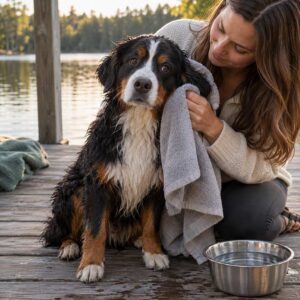
Dog swimming safety does not end when your dog gets out of the water. Rinsing off chlorine, salt, or lake debris helps prevent skin irritation, and offering fresh water afterward discourages your dog from drinking pool or lake water, which can lead to stomach upset or, in more serious cases, water intoxication. Drying ears thoroughly also matters, since trapped moisture from swimming is a common cause of ear infections in dogs with floppy or hair-covered ears. Our dog ear care guide walks through the drying and cleaning steps that pair well with a post-swim routine.
What We’ve Seen With Our Own Dogs
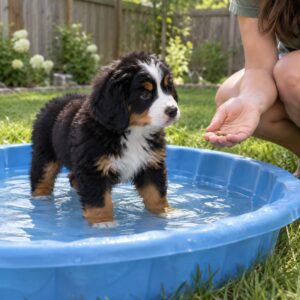
At Love Berners, one thing we always tell families is that dog swimming safety looks different for every dog, even within the same litter. We have had puppies who waded into a kiddie pool without a second thought, and littermates from the same parents who needed weeks of slow, positive exposure before they felt comfortable getting their paws wet. Neither reaction means anything is wrong. What matters is reading your own dog’s comfort level and never forcing the process, because a bad first experience with water can create hesitation that takes a long time to undo.
FAQ
Can all dogs swim naturally?
No. While many dogs have an instinct to paddle, not all breeds or individual dogs are comfortable or capable swimmers without guidance and practice.
Do dogs need a life jacket in a pool?
It depends on the dog, but life jackets are strongly recommended for weaker swimmers, puppies, and any dog in open water like a lake or ocean.
How do I know if my dog is getting tired while swimming?
Watch for heavier breathing, slower movement, or a more vertical swimming position, which often signals fatigue setting in.
Is it safe for dogs to drink pool or lake water?
Drinking small amounts occasionally is usually fine, but large amounts can cause stomach upset or, in serious cases, water intoxication.
Should I rinse my dog off after swimming?
Yes, rinsing removes chlorine, salt, or bacteria from lake water and helps prevent skin and coat irritation.