
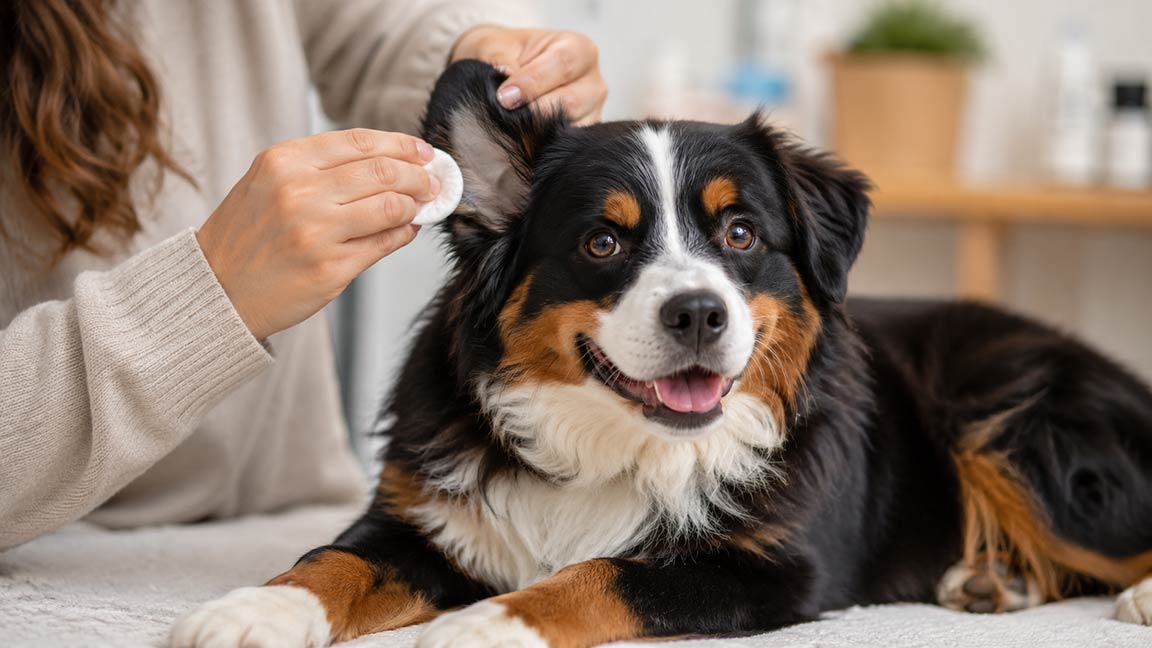
Dog ear care is one of the most overlooked aspects of routine pet health, yet it is one of the most important. Ear infections are among the most common reasons dogs visit the vet, and in most cases, they are entirely preventable with the right knowledge and a consistent care routine. Whether you are a first-time dog parent or a seasoned one, understanding how to keep your dog’s ears clean, dry, and healthy can save your pup a lot of discomfort and your family unnecessary vet visits.
At Love Berners, we believe that every dog deserves a loving home and every home deserves a loving dog. Part of honoring that belief is ensuring the families who welcome our puppies feel fully prepared and supported, not just on day one but in every year that follows. Dog ear care is one of those topics we come back to again and again, because getting it right early makes a lasting difference.
Understanding Your Dog’s Ear Anatomy

Before diving into dog ear care cleaning techniques and prevention strategies, it helps to understand why dogs are so prone to ear issues in the first place. Unlike human ears, which have a relatively straight ear canal, a dog’s ear canal is shaped like an L. That vertical and horizontal structure creates a warm, dark environment where moisture, debris, and bacteria can easily accumulate if the ear is not regularly maintained.
Some dogs have upright ears that allow for better airflow and natural drying. Others have floppy ears that sit close to the head, trapping heat and moisture underneath. Dogs with hair growing inside the ear canal face an additional challenge, as that hair can trap debris and further slow airflow. Understanding your individual dog’s ear structure is the first step toward building a care routine that actually works for them.
How Often Should You Clean Your Dog’s Ears?
There is no single answer that applies to every dog. Dog ear care frequency depends on the individual dog’s breed, ear structure, activity level, and history of ear issues. As a general guideline:
- Dogs with upright ears and no history of infections may only need cleaning once a month or when visibly dirty.
- Dogs with floppy ears, heavy ear leather, or hair in the ear canal typically benefit from cleaning every one to two weeks.
- Dogs that swim regularly should have their ears cleaned and dried after every swim without exception.
- Dogs with a history of recurring ear infections may need more frequent attention and a vet-guided maintenance routine.
When in doubt, ask your veterinarian at your next visit. They can examine your dog’s specific ear anatomy and provide a personalized recommendation based on what they see.
Signs Your Dog May Have an Ear Infection
Catching an ear infection early makes treatment faster, easier, and far less uncomfortable for your dog. Here are the signs to watch for:
- Frequent head shaking or tilting the head to one side
- Scratching at one or both ears, sometimes intensely
- Redness, swelling, or warmth inside the ear
- A strong, yeasty, or foul odor coming from the ear
- Dark brown or black discharge that looks waxy or gritty
- Whimpering or pulling away when you touch the ear area
- Loss of balance or unusual eye movements in more severe cases
If you notice any of these signs, do not attempt to treat the infection at home with over-the-counter products before consulting your vet. The cause of the infection matters. Bacterial infections, yeast infections, and ear mites each require different treatments, and using the wrong product can make things worse.
How to Clean Your Dog’s Ears at Home
Once you have the green light from your vet and the right supplies, cleaning your dog’s ears at home is straightforward. Done calmly and consistently from puppyhood, most dogs come to tolerate it well, and some even enjoy the attention.
What You Will Need
- A veterinarian-recommended ear cleaning solution
- Cotton balls or gauze pads
- Treats for positive reinforcement
- A calm, quiet space where your dog feels comfortable
Never use cotton swabs inside the ear canal. They can push debris deeper and risk damaging the eardrum. Cotton balls and gauze are the right tools for home cleaning.
Step-by-Step Ear Cleaning
- Start by letting your dog sniff the cleaning solution and rewarding them with a treat.
- Gently lift the ear flap and apply a few drops of the cleaning solution into the ear canal.
- Gently massage the base of the ear for about 30 seconds. You should hear a soft squishing sound as the solution moves through the canal.
- Allow your dog to shake their head, which helps bring up and out any loosened debris.
- Use a cotton ball to wipe away any visible discharge or residue from the inner ear flap and the opening of the canal.
- Reward generously and keep the experience positive from start to finish.
Repeat on the other ear and always finish with plenty of praise. A calm, rewarding experience every time builds trust and makes future dog ear care easier.
Choosing the Right Ear Cleaning Solution
Not all ear cleaners are created equal. Look for a veterinarian-formulated solution designed to dry the ear canal after use, as moisture left behind is a primary contributor to infection. Avoid products that contain alcohol or hydrogen peroxide, as these can irritate the delicate tissue inside the ear and cause more harm than good.
If your dog has a known sensitivity or a history of recurring infections, ask your vet whether a medicated or prescription-strength cleaner would be more appropriate for their specific needs.
Preventing Ear Infections: Daily and Weekly Habits
Cleaning is only one part of prevention. These everyday dog ear care habits go a long way toward keeping your dog’s ears consistently healthy.
Keep Ears Dry
Moisture is the single biggest contributor to ear infections in dogs. After baths, swimming, or any water activity, gently dry the outer ear with a soft towel and use a few drops of drying ear solution if your vet recommends it. Tilt your dog’s head gently to help any water drain naturally from the canal.
Monitor Ear Hair
Some breeds grow hair inside the ear canal that can trap moisture and debris. Your groomer can remove this hair during regular grooming appointments, or your vet can show you how to do it safely at home. This is not necessary for every dog, but for those prone to buildup, it can make a noticeable difference.
Maintain Regular Grooming Appointments
A good groomer will check and clean your dog’s ears as part of a regular grooming session. Keeping up with grooming appointments ensures that ear health is consistently monitored, not just when a problem becomes obvious.
Feed a Balanced, High-Quality Diet
Chronic ear infections can sometimes be a sign of underlying food allergies or sensitivities. Dogs with recurring yeast infections, in particular, may benefit from a dietary review with their vet. A high-quality diet that supports immune health can reduce inflammation throughout the body, including in the ear canal.
Schedule Regular Vet Checkups
Routine wellness visits give your vet the opportunity to examine your dog’s ears before a problem develops. Early detection of inflammation, buildup, or structural changes can prevent a minor issue from becoming a painful, chronic one.
Dog Ear Care for Mini Bernese Mountain Dogs and Tiny Bernedoodles
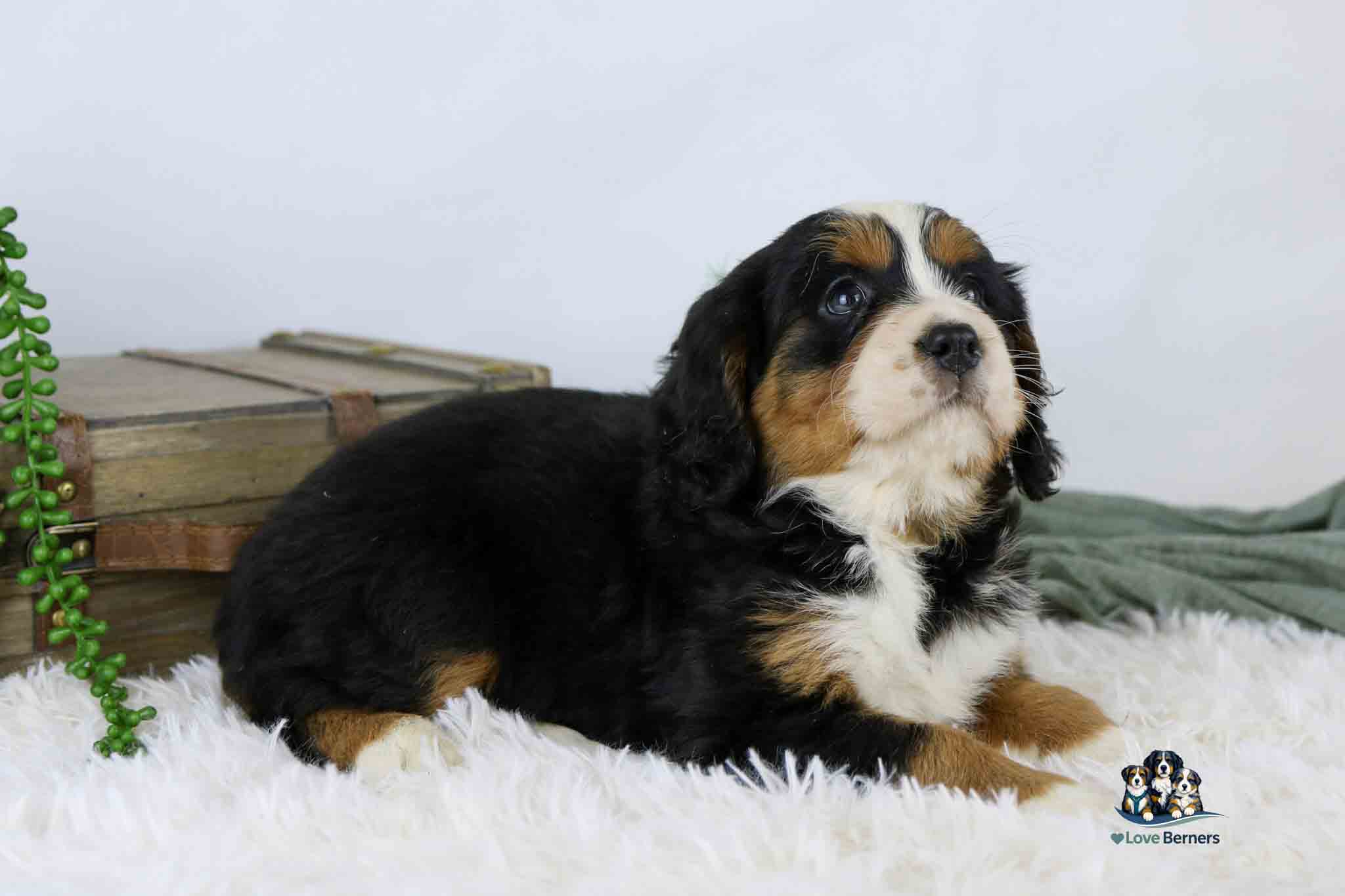
At Love Berners, our Mini Bernese Mountain Dogs and Tiny Bernedoodles are breeds that deserve a little extra attention when it comes to ear health. Both carry the floppy, heavily feathered ears that are a hallmark of their breed, and that beautiful ear set, while undeniably adorable, creates a warm, sheltered environment where moisture and yeast love to thrive.
Tiny Bernedoodles in particular, with their Poodle influence, often grow hair inside the ear canal that requires regular monitoring and occasional removal. We recommend establishing a dog ear care cleaning routine from the very first weeks at home so your puppy learns to accept handling as a normal and comfortable part of life.
Our team is always available to walk new families through exactly what to look for, how to clean, and when to call the vet, because post-adoption support is not an afterthought for us. It is central to everything we do.
When to See the Vet
Some situations call for professional attention rather than home care. Reach out to your veterinarian if:
- Your dog is in visible pain when you touch or approach the ear
- The discharge is bloody, very dark, or has a strong odor
- Symptoms do not improve within a day or two of home cleaning
- Your dog has had more than two ear infections in a single year
- You notice any swelling or a soft lump on the ear flap, which could indicate a hematoma
Recurring infections are never something to simply manage with cleaners alone. They are a signal that something deeper needs to be addressed, whether that is allergies, anatomy, or an underlying health condition, and your vet is the right partner for that conversation.
Frequently Asked Questions
How often should I clean my dog’s ears?
Most dogs with floppy ears benefit from cleaning every one to two weeks, while dogs with upright ears may only need monthly attention. Dogs that swim regularly should have their ears cleaned and dried after every water activity. Your vet can give you a personalized recommendation based on your dog’s ear structure and health history.
What does a dog ear infection smell like?
A dog ear infection typically produces a noticeable yeasty, musty, or foul odor that differs from that of a normal, clean ear. If you notice a strong smell coming from your dog’s ear, especially accompanied by discharge or scratching, it is worth a visit to the vet to rule out infection.
Can I use water to clean my dog’s ears?
Water is not recommended for ear cleaning because it does not dry out of the canal effectively and can actually contribute to the moist environment that promotes infection. Use a veterinarian-formulated ear cleaning solution designed to evaporate and dry the canal after use.
Why does my dog keep getting ear infections?
Recurring ear infections are often linked to allergies, either environmental or food-related, as well as anatomical factors such as heavy ear flaps, excessive ear hair, or narrow ear canals. If your dog has more than one or two infections per year, a conversation with your vet about underlying causes is worth having rather than simply treating each episode as it comes.
Are certain dog breeds more prone to ear infections?
Yes. Dogs with floppy ears, dogs that swim frequently, and breeds with hair growing inside the ear canal are at higher risk. Regular preventive care is especially important for these dogs, and establishing a consistent routine early in puppyhood makes a significant difference over time.
Is it safe to clean my dog’s ears at home?
Yes, as long as you use the right products, avoid inserting anything deep into the ear canal, and keep the experience calm and positive. If your dog is already showing signs of infection, see your vet before cleaning at home, as cleaning an infected ear without proper diagnosis can sometimes aggravate the condition.