
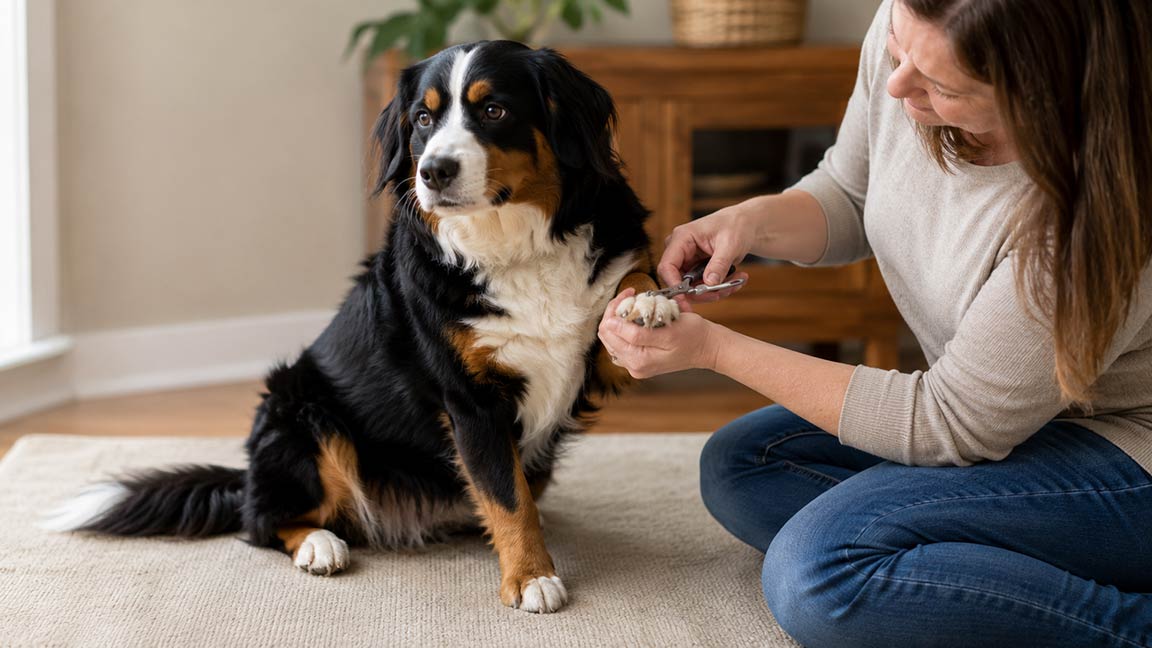
Dog nail care means trimming nails every three to four weeks, or whenever you hear clicking on hard floors. The right length keeps a dog’s paw structure healthy and prevents pain, so most owners trim just before the quick, the pink blood vessel inside the nail, taking small amounts off gradually rather than one big cut.
At Love Berners, dog nail care is one of those routine tasks that gets overlooked until a nail cracks or a dog starts limping. We talk through it with every family who takes home a Mini Bernese Mountain Dog or Tiny Bernedoodle puppy, because good dog nail care habits started early make the whole process far less stressful for both the dog and the owner. Nails that grow too long change how a dog stands and walks, and over time that can lead to real discomfort, so building dog nail care into your regular routine matters more than most people expect.
Why Dog Nail Care Matters
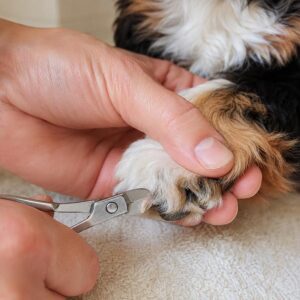
Overgrown nails do more than just look long. When nails touch the ground and push back up into the nail bed with every step, it forces a dog’s toes to splay and changes their natural posture. Left unaddressed, poor dog nail care can lead to joint strain, an altered gait, and even long-term changes to how a dog’s foot is structured. Long nails are also more likely to catch on carpet, furniture, or grass and tear, which is a painful injury that is entirely preventable with consistent dog nail care.
How Often Should You Trim Your Dog’s Nails?
Most dogs need a trim every three to four weeks, though this varies based on activity level and surface type. Dogs who spend a lot of time walking on pavement wear their nails down naturally and may need dog nail care less often, while dogs who mostly walk on grass or carpet usually need more frequent trims. A simple rule works well for most owners: if you can hear your dog’s nails clicking on hardwood or tile floors, it is time for a trim.
How Short Should You Cut Your Dog’s Nails?
Good dog nail care means trimming close to, but never into, the quick. The quick is the blood vessel and nerve running through the center of the nail, and cutting into it is painful and causes bleeding. On light-colored nails, the quick is usually visible as a pink area, which makes dog nail care more straightforward. On dark nails, it helps to trim in small increments and stop as soon as you see a small gray or chalky-white dot appear in the center of the cut surface, which signals you are getting close.
Step-by-Step Dog Nail Care at Home
Get Your Dog Comfortable With Paw Handling First
Before any trimming happens, dogs need to feel comfortable having their paws touched and held. Spend a few minutes a day gently handling paws and offering treats, especially during puppyhood, so dog nail care never feels like a surprise or a struggle later on. Our puppy training page covers more on building calm, positive associations with handling in general, which lays the groundwork for easier nail trims down the road.
Choose the Right Tool
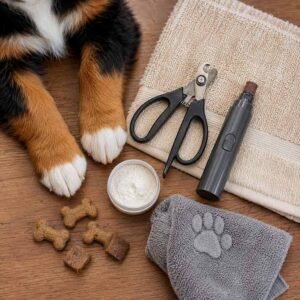
Guillotine-style clippers, scissor-style clippers, and grinders all work well depending on your dog’s size and your own comfort level. Whichever tool you choose, keep it sharp, since dull blades crush the nail instead of cutting cleanly and make dog nail care more uncomfortable than it needs to be.
Trim in Small Increments
Rather than trying to take off a large amount in one cut, trim a thin slice at a time. This is the safest approach to dog nail care because it gives you multiple chances to check for the quick before you get too close.
Keep Styptic Powder on Hand
Even with careful dog nail care, nicking the quick occasionally happens. A small amount of styptic powder pressed onto the tip stops the bleeding within a minute or two, so it is worth keeping some in your grooming kit alongside your other essentials.
Reward Throughout, Not Just at the End
Giving treats and praise during the trim, not only afterward, helps dogs build a positive association with the entire process. This turns dog nail care into something dogs tolerate calmly rather than dread.
Dog Nail Care Fits Into a Bigger Grooming Routine
Nail trims work best when they are treated as one piece of a broader grooming routine rather than an isolated task. Our Mini Bernese Mountain Dog coat and grooming guide covers how brushing, bathing, and nail care fit together, and pairing dog nail care with regular ear care and dental care sessions helps dogs get comfortable with full-body handling rather than dreading any one specific task.
What We’ve Learned Raising Puppies at Love Berners
I’m Wilbur, and one thing I have noticed after years of raising Mini Bernese and Bernedoodle puppies is that dog nail care goes so much smoother when it starts before a puppy ever needs a real trim. We handle paws gently from the earliest weeks, long before nails need cutting, just so it becomes a normal, boring part of being touched. Puppies who get this early exposure almost never fight the process later, while dogs who are only introduced to nail trims as adults tend to need much more patience and slower conditioning. It is a small thing, but it makes a real difference in how a dog feels about grooming for the rest of their life.

Signs Your Dog’s Nails Are Too Long
- Clicking or tapping sounds on hard floors
- Nails visibly touching the ground when your dog stands still
- Difficulty gripping smooth surfaces
- Nails curling to the side or under the paw
- Visible discomfort when walking on hard surfaces
Catching these signs early means dog nail care stays a simple maintenance task rather than becoming a bigger issue that needs veterinary attention.
When to Get Help With Dog Nail Care
If your dog has particularly dark nails that make the quick hard to see, or if your dog is especially anxious about trims, a groomer or vet can help safely. There is no shame in outsourcing dog nail care, especially for nervous dogs, since a bad early experience can make future trims much harder.

FAQ
How often should I trim my dog’s nails?
Most dogs need a trim every three to four weeks, though dogs who walk mostly on pavement may need it less often.
What happens if I cut the quick?
A small amount of bleeding is normal and usually stops within a minute or two with gentle pressure or styptic powder.
Why does my dog hate having their nails trimmed?
Past discomfort or lack of early paw handling are the most common reasons, and slow, positive conditioning can help rebuild trust.
Can I use human nail clippers on my dog?
No, human clippers can crush or splinter a dog’s nail, so it is best to use clippers or grinders made specifically for dogs.
Do active dogs still need regular nail trims?
Yes, though outdoor exercise on hard surfaces can naturally wear nails down, most dogs still need occasional trims to stay at a healthy length.