
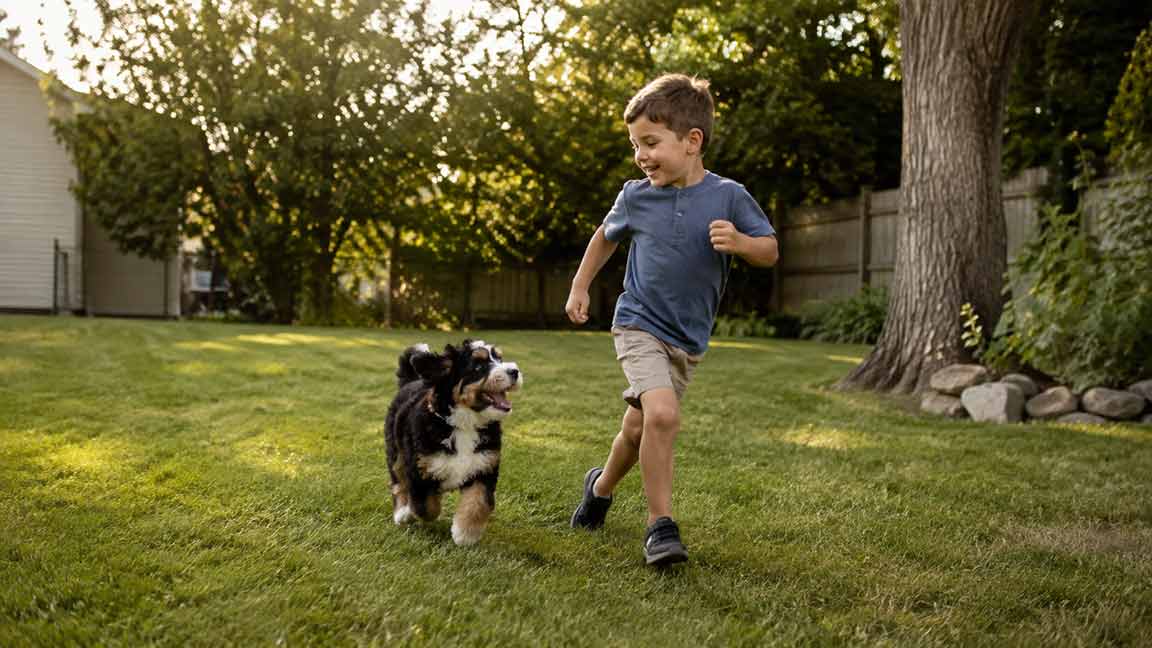
Bringing a new puppy home to a house full of kids is one of the most exciting days a family can have, and also one that goes a lot more smoothly with a little preparation. At Love Berners, puppies and children can become the best of friends, but that bond starts with a calm, well-planned introduction rather than a big, loud welcome. Here’s what to expect at every stage, from the days before pickup through the first few months together.
Before Your Puppy Comes Home
A little prep work in the days before pickup makes the actual introduction far less stressful for everyone involved, puppy included. Puppy-proofing, gathering supplies, and setting a few ground rules ahead of time means your family can focus on bonding instead of scrambling once your puppy walks through the door.
A simple checklist to work through before pickup day:
- Puppy-proof the main living areas. Tuck away shoes, cords, cleaning supplies, and anything small enough to chew or swallow.
- Set up a quiet, designated space. A crate, bed, and food and water bowls in a low-traffic area gives your puppy somewhere to retreat that’s entirely their own.
- Choose a consistent feeding and potty schedule before your puppy even arrives, so the whole household starts on the same routine from day one.
- Pick up basic supplies in advance, including a leash, collar or harness, age-appropriate toys, and puppy-safe cleaning products for accidents.
- Decide where the puppy will sleep for the first few weeks, ideally a crate near an adult’s room rather than a child’s bedroom.
Preparing Your Kids Before the Puppy Arrives
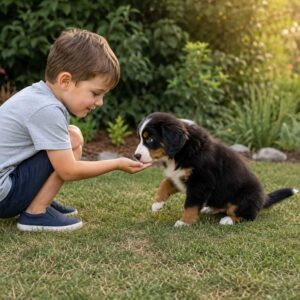
Kids are naturally excited, and that excitement can be a lot for a puppy who’s just left the only home they’ve ever known. Before the big day, talk with your children about using calm voices and slow movements around the new puppy. Teach them to pet gently along the back rather than reaching for the face, and explain that the puppy needs to be the one to approach first, not the other way around. It’s also worth setting the expectation early that the puppy shouldn’t be picked up, hugged tightly, or chased, even out of love, since those actions can feel frightening to a puppy still adjusting to a brand new environment.
Practicing gentle touch on a stuffed animal in the days beforehand can help younger children build the habit before they’re ever near the real thing. It sounds small, but it gives kids a low-stakes way to rehearse “soft hands” so it’s already second nature by the time your puppy is actually there to practice on.
Age-Appropriate Ways Kids Can Help
Giving children a real role in caring for the new puppy, scaled to what they can actually handle, helps them feel included and builds a sense of responsibility toward their new family member. What that looks like tends to shift with age:

- Toddlers and preschoolers: sitting calmly to let the puppy approach, helping fill a water bowl with supervision, and learning simple phrases like “gentle hands”
- Elementary-age kids: measuring out food at mealtimes, helping with short training sessions using treats, and taking turns on a leash walk with an adult nearby
- Older kids and preteens: taking more independent responsibility for feeding schedules, practicing commands they’ve learned together, and helping with brushing or basic grooming
Matching responsibilities to what a child can genuinely manage, rather than assigning everything at once, keeps the experience positive for both puppy and kids.
How We Prepare Our Puppies for This Before They Leave Our Home
By the time one of our Love Berners puppies is ready to go home, they’ve already had real, positive exposure to children, not just adults. Our foundational training includes structured socialization with kids of different ages, so puppies learn early on that children are gentle, safe, and fun to be around rather than a source of stress. We also work on gentle play from the very start, redirecting nipping and rough play into softer interactions, which matters enormously in a household with young children.
This groundwork is built on the same positive reinforcement approach behind everything we do, rewarding calm, gentle behavior around kids from day one rather than waiting to correct problems after they show up. It’s a big part of why families who bring one of our puppies home tend to have such a smooth first few weeks; the groundwork was already laid before your puppy ever walked through your door.
The First Introduction: What to Expect
Choose a calm, quiet space for the actual introduction, ideally with the puppy on a leash and the kids already seated on the floor. Let the puppy approach on their own terms rather than crowding them the moment they walk in. The first few minutes matter more than most families expect. If everyone is squealing and reaching at once, even a naturally confident puppy can get overwhelmed fast, so keep that first meeting brief, quiet, and low-key. There will be plenty of time for playing and cuddling once the puppy has had a chance to settle in and feel safe.
The First Few Weeks: What to Expect
The excitement of a new puppy tends to fade into a routine within a couple of weeks, and that’s completely normal. Expect naps that come on suddenly, a few accidents while housetraining is still underway, and a fair amount of teething and nipping as your puppy explores the world with their mouth. Kids often want constant playtime in the beginning, but puppies actually need a lot of rest, often 18 to 20 hours a day for very young puppies, so building in quiet, no-contact hours as part of the daily routine helps prevent overtiredness and crankiness on both sides.
It’s also common for a puppy’s confidence to dip a little after the first few days, once the novelty wears off and they realize this new, loud environment is permanent. This is a normal adjustment period, not a sign that anything is wrong. Predictable feeding, potty, and nap times help your puppy settle in faster, and they give your kids a comforting routine to look forward to as well.
Teaching Kids to Read Puppy Body Language
One of the most useful things you can teach your children early on is how to recognize when a puppy needs space. Watching for these signals, rather than only reacting once a puppy growls or snaps, prevents most conflicts before they ever happen.
Signs your puppy needs a break, worth teaching kids to notice:
- A tucked tail or ears pinned back
- Trying to move away, hide, or leave the room
- Yawning or lip licking outside of normal sleepy moments
- Turning their head or whole body away from a child
- A stiff, still posture instead of relaxed, loose movement
Kids don’t need to memorize every signal perfectly. Even learning the general idea that a puppy “asking for space” should be respected, not followed, goes a long way toward preventing accidental nips or scares.
Setting Household Rules for Everyone
A few consistent rules make life easier for the whole family, and they work best when every adult in the house enforces them the same way.

- Never leave young children and a puppy alone together unsupervised, no matter how gentle either one seems to be.
- Don’t disturb a puppy while they’re eating, chewing a toy, or sleeping, since even the sweetest puppy can react defensively if startled.
- Keep play sessions calm and supervised, especially in the first few weeks while everyone is still learning each other’s cues.
- Address any growling, snapping, or fearful behavior early with a professional trainer rather than waiting to see if it resolves on its own.
- Make sure every family member, kids included, uses the same commands and house rules so the puppy isn’t getting mixed signals.
Signs the Introduction Is Going Well
It’s easy to worry during the first stretch, so it helps to know what genuine progress actually looks like. A few good signs to watch for:
- Your puppy chooses to approach your kids on their own, rather than needing to be coaxed
- Play sessions start calm and stay that way, without escalating into overexcited nipping
- Your puppy naps comfortably in the same room as your children instead of retreating constantly
- Your kids are starting to notice and respect the puppy’s body language without being reminded every time
Progress here is rarely a straight line, and a few rocky days mixed in with good ones is completely normal.
Growing Up Together
The families who have the smoothest experience bringing a new puppy home to kids are usually the ones who treat the first few weeks as a slow, gentle introduction rather than a race to instant best friends. Give it time, keep things calm and predictable, and that bond between your puppy and your children will build itself, often into one of the most meaningful relationships your kids will have growing up.
Frequently Asked Questions
What is the best age to bring a puppy home to kids?
Most breeders recommend bringing a puppy home around 8 weeks old, which is also when puppies are best equipped to start bonding with a new family, including children.
How do I introduce a new puppy to my kids for the first time?
Choose a calm, quiet space, have kids sit on the floor, and let the puppy approach on their own terms rather than crowding or reaching for them right away.
Should I let my puppy sleep in my child’s room?
It’s best for a new puppy to sleep in a crate near an adult at first, since consistent overnight routines help with house training and settling in faster.
How do I know if my puppy is stressed around my kids?
Watch for a tucked tail, pulled-back ears, lip licking, or the puppy trying to move away, all signs your puppy needs space rather than more attention.
What if my puppy nips or play-bites my kids?
Nipping is common and expected in puppies. Redirect it toward a toy immediately and reward calmer play, rather than punishing the behavior directly.
What chores can young kids handle with a new puppy?
Toddlers can help fill water bowls with supervision, while elementary-age kids can measure food or join short training sessions using treats.
Do you prepare your puppies for children before they go home?
Yes, our puppies get structured socialization with children and gentle play training before they ever leave our home, so the transition to your family is smoother.
Bringing a new puppy home to kids is a big milestone, and it’s one we think about at every stage of raising our puppies, long before they ever meet your family. If you’re ready to bring one of our puppies home, see our available puppies or reach out with any questions about getting your household ready.