
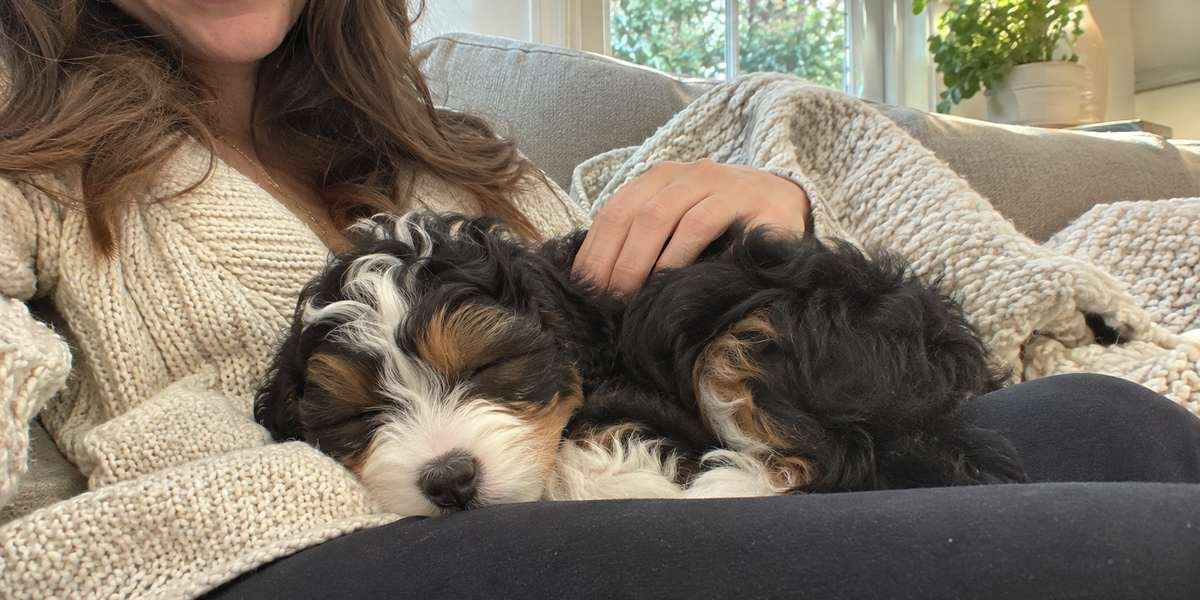
New owners often call us a few days after pickup with the same worried question: “Is it normal that my puppy sleeps this much?” At Love Berners, we raise Mini Bernese Mountain Dogs and Tiny Bernedoodles, and we can tell you the answer is almost always yes. Young puppies spend most of the day asleep, and that rest is doing real work for their growing bodies and brains. A simple puppy sleep schedule by age helps you know what is normal, what to expect next, and when a change in sleep is worth a call to your vet.
This guide walks through how much rest dogs need at every stage, a sample day for a new 8-week-old puppy, and the small habits that help your pup settle into a routine that works for the whole family.
Why Puppies Sleep So Much
A puppy’s body is growing fast, and so is its brain. Short bursts of play burn through a lot of energy, and sleep is when the body recovers and builds. That is why it is normal for puppies to sleep up to 20 hours a day.
Sleep also helps puppies learn. Researchers in Hungary found that dogs who napped after learning new commands performed better when tested again. That is one reason we schedule rest between lessons during the one-week of behavior training every Love Berners puppy receives with our partner trainer, Darrel Herschberger. You can read more about that program on our puppy training page.
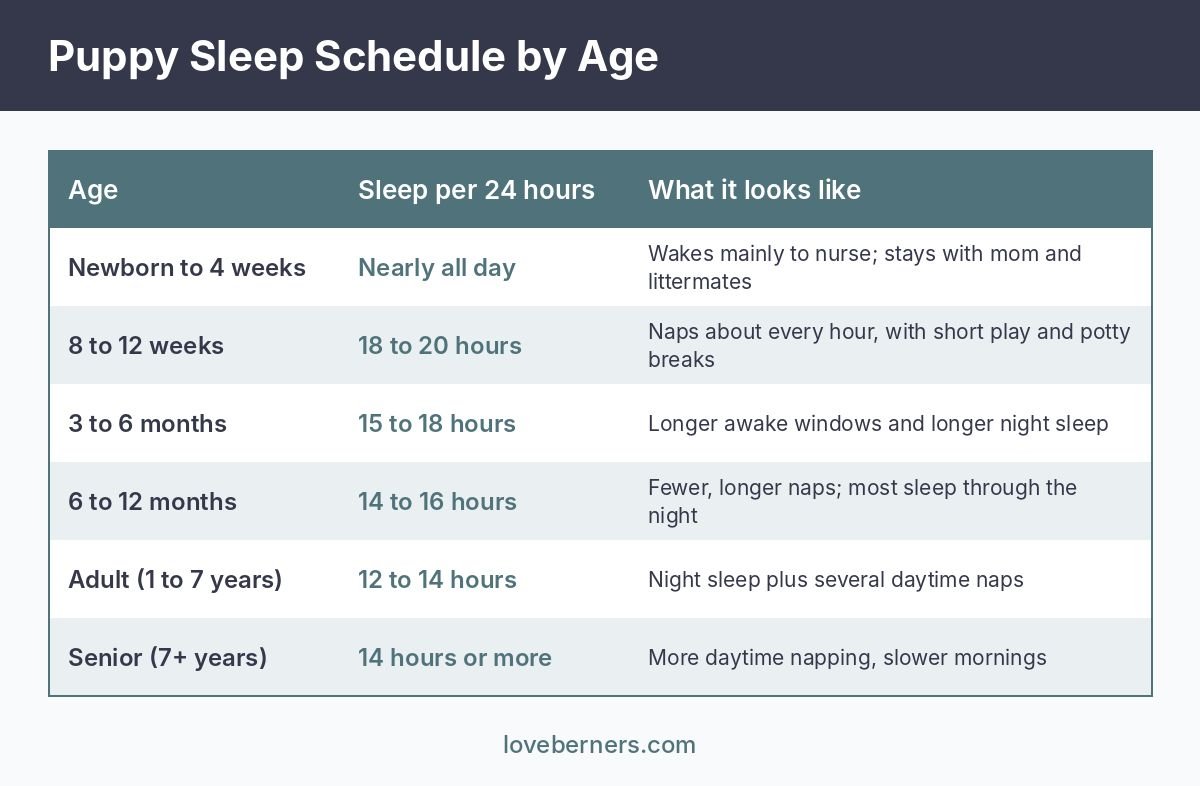
Puppy Sleep Schedule by Age
Every dog is an individual, so treat these numbers as a guide, not a rule. Activity level, health, and even the weather can shift how much your pup sleeps on a given day.
Newborn to 8 Weeks
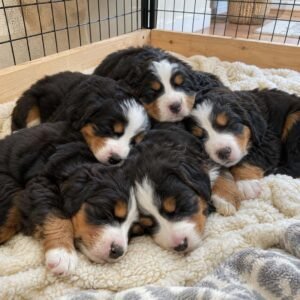
In the first weeks of life, puppies do little besides eat and sleep. Our puppies spend this time with their mothers and littermates while our team handles health checks, vaccinations, and early socialization. By the time they go home at 8 weeks, they are starting to have short, playful awake windows.
8 to 12 Weeks
This is the age most families bring their puppy home, and it is the sleepiest stage you will see. Puppies this age usually sleep 18 to 20 hours a day and may nap about every hour, for 30 minutes to two hours at a time. Expect one or two potty trips overnight. If your first evening feels rocky, our guide to the first night with a new puppy covers what to expect.
3 to 6 Months
Your puppy will stay awake longer and start to sleep in bigger blocks at night, so the puppy sleep schedule you started with will need a few adjustments. Teething usually arrives in this window, and sore gums can interrupt naps. Our puppy teething guide has tips for keeping your pup comfortable, so rest comes easier.
6 to 12 Months
Adolescent dogs nap less often but still need plenty of rest. Most puppies in this range sleep through the night and settle into a pattern that looks a lot like an adult dog’s day.
Adult Dogs
Grown dogs typically sleep 12 to 14 hours a day, and they may spend up to 37 percent of the daytime asleep. Larger breeds tend to sleep more than small ones, so a Mini Berner may rest a little more than a busy Tiny Bernedoodle.
Senior Dogs
Older dogs nap more during the day and may sleep in later. Some of this is normal aging, but sudden changes deserve attention. Our post on senior dog care explains what to watch for as your dog grows older.
A Sample Puppy Sleep Schedule for an 8-Week-Old Puppy
Here is a simple puppy sleep schedule built around naps, meals, and potty breaks. Adjust the times to fit your household; what matters most is that the pattern repeats.

- 7:00 a.m.: Wake up and go straight outside for a potty break
- 7:15 a.m.: Breakfast, then another potty break
- 7:45 a.m.: Play, gentle handling, and a short training session
- 8:30 a.m.: Nap in the crate or playpen
- 10:30 a.m.: Potty break, play, and exploring
- 11:30 a.m.: Nap
- 1:00 p.m.: Potty break, lunch, potty break
- 1:30 p.m.: Play and socialization
- 2:30 p.m.: Nap
- 4:30 p.m.: Potty break and play
- 5:30 p.m.: Dinner, then a potty break
- 6:00 p.m.: Family time and calm play
- 7:30 p.m.: Short nap
- 9:30 p.m.: Last potty break and bedtime
- Overnight: One or two quick, quiet potty trips, then back to bed
Pair your puppy sleep schedule with a consistent potty plan. Our guides to potty training a Mini Bernese and potty training a Bernedoodle puppy line up well with this daily rhythm.
How to Help Your Puppy Sleep Well
Give Them a Safe, Cozy Spot
A crate or playpen gives your puppy a den where it can fully relax. Animal welfare experts recommend making the crate a comfortable, positive place and never using it as punishment. For step-by-step help, see our crate training tips. A soft, inexpensive blanket works better than a fancy bed in the early weeks, since puppies love to chew.
Keep the Area Quiet and Dim
Place the crate somewhere calm, away from the busiest part of the house. A crate cover can help a puppy wind down during the day when the household is active.

Watch for the Overtired Puppy
Puppies do not always know when to stop. An overtired puppy often gets more mouthy, more frantic, and harder to settle, which can look like a sudden case of the zoomies. If your pup starts nipping at everything late in the afternoon, a nap may fix it faster than a correction. Our post on puppy biting solutions explains how tiredness and nipping are connected.
Balance Activity and Rest
A puppy that gets the right mix of play and brain work tends to sleep more soundly. Sniffing games, puzzle toys, and short training sessions tire puppies out in a healthy way. Our list of ideas for mental stimulation for dogs is a good place to start. As your Mini Berner grows, our guide to Mini Bernese Mountain Dog exercise needs will help you increase activity at a safe pace.
Have the Right Supplies Ready
A crate, a washable blanket, a few safe chew toys, and an enzyme cleaner for accidents make the first weeks much easier. Our new puppy checklist covers everything you need before pickup day.
When to Call Your Veterinarian
 Lots of sleep is normal for a puppy. A sudden change in sleep, especially paired with other symptoms, is a different story. Veterinarians point to these warning signs that a sleepy puppy may be unwell:
- Lethargy or unusual tiredness that does not improve
- Restlessness at night
- Changes in appetite
- Changes in potty habits
- Less interest in play
- Heavy snoring or gasping during sleep
If you notice any of these, call your vet. Our families can also reach out to us anytime, since ongoing support is part of every Love Berners adoption. Our puppy care page is a helpful reference too.
Rest Well, Grow Well
A predictable puppy sleep schedule is one of the kindest things you can give a new dog. It supports healthy growth, makes potty training smoother, and helps your puppy remember what it learns. Give your pup a quiet place to rest, protect those naps, and let the schedule grow with your dog from the 18 hour days of puppyhood to the relaxed routine of adulthood.
We believe every dog deserves a loving home, and every home deserves a loving dog. If you are ready to welcome a Mini Bernese Mountain Dog or Tiny Bernedoodle into yours, take a look at our available puppies.
Frequently Asked Questions
How many hours should an 8-week-old puppy sleep?
Most 8-week-old puppies sleep 18 to 20 hours a day, napping often between short periods of play, meals, and potty breaks.
Should I wake my puppy up to go potty at night?
For young puppies, a quick, quiet overnight potty trip is normal. Keep it calm and boring, then return your pup to bed.
Is it bad to let my puppy nap all day?
No. Frequent daytime naps are normal and healthy for puppies, as long as your pup is alert and playful when awake.
Why does my puppy get bitey before naps?
Overtired puppies often get mouthy and wild. A calm crate break usually helps more than extra play when your pup reaches that point.
When do puppies start sleeping through the night?
Many puppies sleep through the night somewhere between 4 and 6 months old, once bladder control and a steady routine are in place.
Do Mini Bernese Mountain Dogs sleep more than other dogs?
Larger, calmer breeds tend to sleep a bit more. Mini Berners often enjoy long naps, while Tiny Bernedoodles may have more playful energy.