
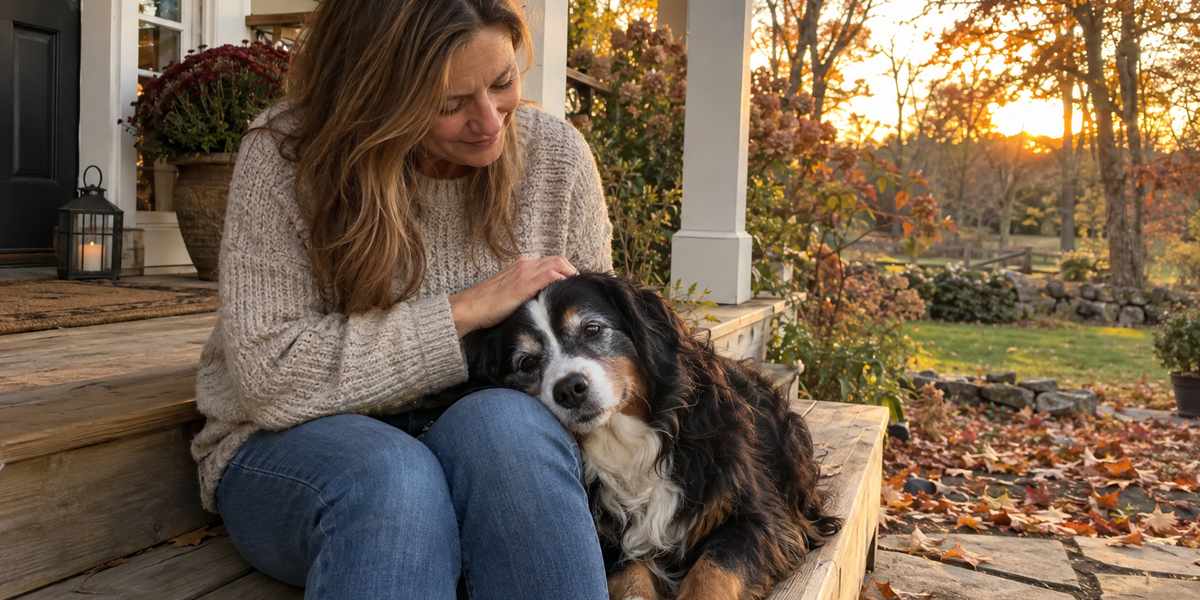
Senior dog care means adjusting diet, exercise, and veterinary checkups as your dog reaches roughly the final quarter of their expected lifespan, watching for gradual changes in mobility, weight, and behavior, and scheduling wellness exams twice a year instead of once.
At Love Berners, senior dog care comes up often with families who adopted a Mini Bernese Mountain Dog or Tiny Bernedoodle from us years ago and are now noticing their once bouncy puppy slowing down. Senior dog care is not about one dramatic change; it is about a series of small, gradual adjustments that keep your dog comfortable and healthy for as long as possible.
When Does Senior Dog Care Actually Begin?
Good senior dog care starts with understanding that there is no single age that applies to every dog. The American Kennel Club explains that many veterinarians consider a dog senior once they reach roughly the final quarter of their expected lifespan rather than a flat age like seven. For a breed like the Mini Bernese Mountain Dog, that generally lands somewhere in the 8 to 10 year range, though every individual dog ages a little differently.
What Changes as Dogs Enter Their Senior Years
Senior dog care becomes necessary because aging affects nearly every system in the body. VCA Animal Hospitals lists the major changes to watch for, including reduced muscle tone, decreased calorie needs, reduced thirst sensation, and slower intestinal function, many of which overlap with the common health issues we talk families through at every stage of a dog’s life. None of these changes happen overnight, which is exactly why senior dog care works best as an ongoing conversation with your vet rather than a single checklist.
Mobility and Joint Changes
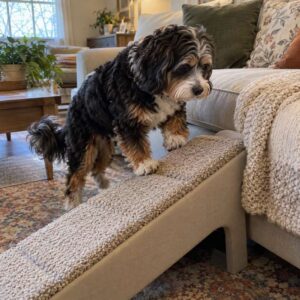
Stiffness, slower movement, and difficulty jumping or climbing stairs are some of the earliest signs that senior dog care needs to adjust. Supporting joint health early, through appropriate exercise and weight management, can make a real difference in comfort over time, which is exactly why we cover exercise needs for a Mini Bernese Mountain Dog at every life stage, not just as puppies.
Weight and Appetite Shifts
As activity naturally decreases, weight gain becomes more common, though sudden weight loss is just as worth mentioning to your vet. Merck Animal Health notes that any unintentional change in body weight, in either direction, can signal an underlying condition worth investigating.
Behavioral and Cognitive Changes
Confusion, nighttime restlessness, or changes in how your dog interacts with the family can be part of normal aging, but they can also point to cognitive decline that a vet can help manage, another reason dental and daily care habits matter just as much for senior dogs as for puppies.
Building a Senior Dog Care Routine
A good senior dog care routine covers a few key areas consistently.
More Frequent Veterinary Visits
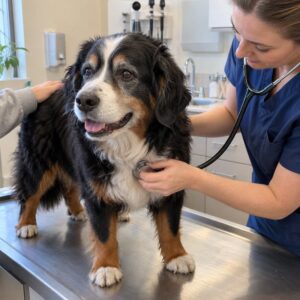
The AAHA’s senior care guidelines recommend a systematic, evidence-guided approach to senior wellness exams, generally twice a year rather than the once-yearly visits that work fine for younger adult dogs. These visits catch problems early, when they are usually easier and less expensive to manage.
Adjusted Nutrition
Senior dogs often need fewer calories but higher quality, more digestible protein. Our own approach to puppy nutrition evolves the same way as a dog ages, since the right diet at eight weeks looks very different from the best diet for a Mini Bernese Mountain Dog at eight years.
Gentle, Consistent Exercise
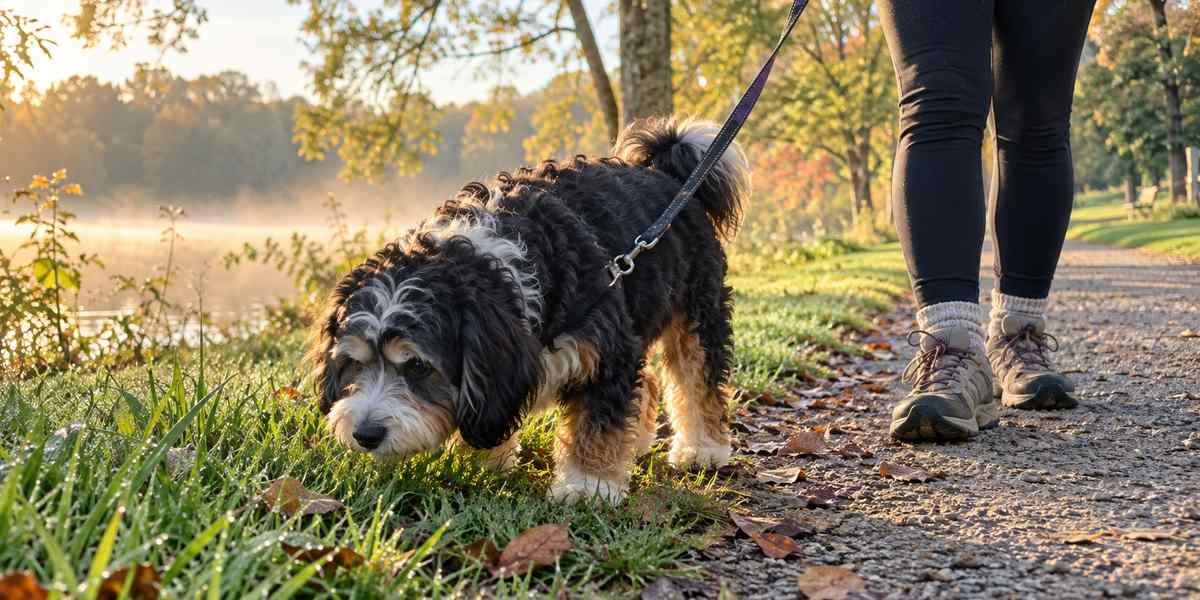
Lower-impact activity, shorter walks with plenty of sniffing time, and mental enrichment all support a senior dog’s quality of life without overtaxing aging joints. The AVMA notes that maintaining mobility through appropriate exercise helps senior pets stay healthier and more mobile for longer.
Comfort at Home
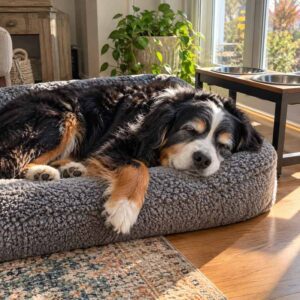
Simple changes like orthopedic bedding, ramps to favorite spots, and raised food bowls can meaningfully improve a senior dog’s daily comfort. ASPCA’s tips for caring for senior pets note that senior pets can still enjoy plenty of fun and connection, it just may look a little different than it did in their younger years.
A Note From Our Team
We have stayed in touch with a lot of families over the years, something we take real pride in as part of who we are, as their Mini Bernese Mountain Dogs and Tiny Bernedoodles have grown from wobbly eight-week-old puppies into steady, gray-muzzled seniors. One thing we always remind people of is that senior dog care is not about mourning the puppy years; it is about giving your dog the best version of whatever stage they are in now. It is part of why our health guarantee reflects a lifelong commitment, not just a puppy stage one. Every dog deserves a loving home, and every home deserves a loving dog, at every single age.
Frequently Asked Questions
At what age is a Mini Bernese Mountain Dog considered a senior?
Most medium-sized breeds like the Mini Bernese Mountain Dog are considered senior somewhere between 8 and 10 years old, though individual health and genetics play a role too.
How often should senior dogs see the vet?
Most veterinarians recommend senior dogs be examined twice a year rather than once, so changes can be caught and addressed early.
Should I change my senior dog’s food?
Often yes, since senior dogs typically need fewer calories but benefit from high-quality, easily digestible protein, though your vet can help you choose the right option.
Is slowing down always a sign of a health problem?
Not necessarily; some slowing down is a normal part of aging, but any sudden or dramatic change in energy, appetite, or mobility is worth mentioning to your vet.
Can senior dogs still learn new things?
Yes, senior dogs can absolutely still learn, and mental engagement through gentle training and enrichment is genuinely good for their cognitive health.