
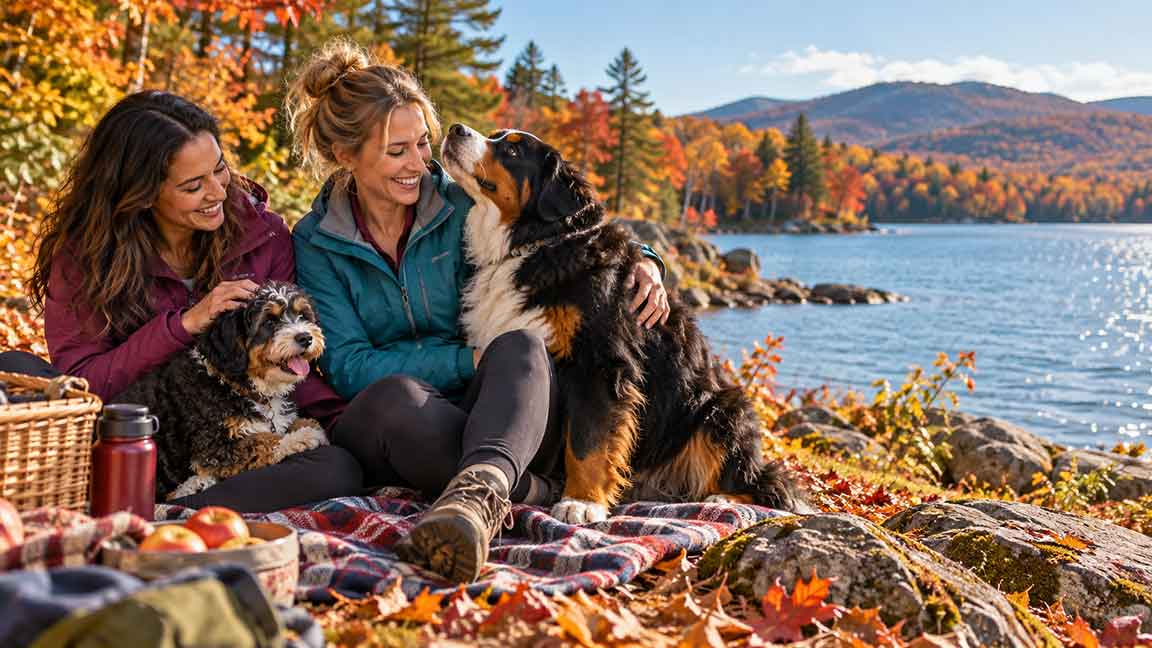
Yes, growing research suggests dogs do get jealous, showing behaviors like pushing between an owner and a rival, whining, or snapping when their person shows affection to another dog, although scientists are still studying whether dogs experience jealousy in the same way humans do.
At Love Berners, we watch a lot of dog behavior day to day, and a question families ask surprisingly often is whether dogs get jealous. Anyone who has had a Mini Bernese Mountain Dog or Tiny Bernedoodle nudge their way onto the couch the moment attention shifts elsewhere already suspects the answer, and it turns out the science backs up what many owners have long believed.

What the Research Says About Dogs and Jealousy
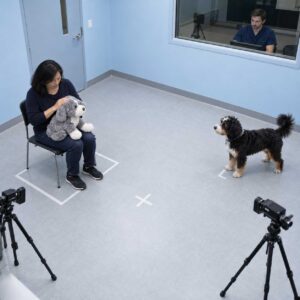
The idea that dogs get jealous has moved from casual observation to real scientific study. A 2014 study out of UC San Diego, covered by the university, found that dogs displayed more jealous behaviors, like snapping or pushing between their owner and a rival, when their owner showed affection to a realistic stuffed dog compared to a neutral object.
A more recent study from the University of Auckland went a step further, finding that dogs still reacted with jealous behavior even when the interaction between their owner and a rival dog was hidden behind a screen, suggesting dogs can mentally represent a situation that would make them jealous.
Primary Versus Secondary Emotions
Whether dogs get jealous ties into a bigger scientific question about canine emotion. According to Stanley Coren, writing for the American Kennel Club, scientists separate emotions into primary emotions like fear and joy, considered universal across species, and secondary emotions like jealousy and envy, which require more complex cognitive processes. For a long time, researchers doubted dogs had the self-awareness needed to experience these secondary emotions, but people who live around dogs have reported jealous behavior for years.
Merck Veterinary Manual’s overview of normal social behavior in dogs notes that dogs maintain social relationships through subtle signals and hierarchy, a foundation that likely supports these more complex emotional responses.
How Jealous Behavior Shows Up
Recognizing when dogs get jealous is mostly about watching behavior patterns rather than trying to read minds. The Association for Psychological Science summarized research showing that dogs display three human-like signatures of jealous behavior: the reaction only happens when a social rival is involved rather than an object, it happens as a direct result of the interaction, and it can happen even when the interaction is out of sight. This is closely related to the same signals we watch for when reading a puppy’s body language, since behaviors like stress or jealousy can look similar at first glance.
Is Jealous Behavior the Same as Separation Anxiety?
Jealous behavior and separation anxiety are not the same thing, even though both involve a dog reacting strongly to a change in attention or connection with their owner. Jealousy tends to show up in the moment, when a rival is present or perceived, while separation anxiety is specifically tied to being left alone. VCA Animal Hospitals’ overview of dogs and our emotions notes that dogs are remarkably attuned to human emotional states and relationships, which helps explain why both reactions can be so strong.
Managing Jealous Behavior in a Multi-Dog or Multi-Pet Home

If you suspect your dogs get jealous around each other, consistency and fair attention go a long way. Our own approach to puppy socialization focuses heavily on teaching puppies to feel secure without needing to compete for attention, and the same principles apply in adult multi-dog households. This matters just as much for a family raising a Mini Bernese Mountain Dog that is good with kids as it does in a home with multiple dogs.
Providing plenty of mental stimulation and giving each dog dedicated one-on-one time, rather than only group attention, tends to reduce the kind of pushing, whining, or attention-seeking behavior associated with jealousy. Enrichment activities from our dog enrichment guide can help here too.
A Note From Our Team
We have raised a lot of litters here, part of what makes us who we are at Love Berners, and anyone who has watched a mother dog with her puppies knows exactly what jealous behavior looks like in real time. The moment one puppy gets extra attention during a health check with the parents nearby, the others are often right there too, nudging a hand or leaning in for equal treatment. It is one of those things that is easy to smile about, but it also reminds us how much dogs genuinely track fairness in their relationships, something we try to model for new families well before their puppy even goes home.
Frequently Asked Questions
Is there real scientific evidence that dogs get jealous?
Yes, multiple university studies have found that dogs display consistent jealous behaviors when their owner shows attention to a perceived rival, even when the interaction is hidden from view.
What does jealous behavior look like in dogs?
Common signs include pushing between the owner and a rival, whining, snapping at the rival, or trying to physically break up the interaction.
Can dogs be jealous of a new baby or pet in the home?
Yes, dogs can show jealous behaviors when attention shifts toward a new baby or pet, and gradual, positive introductions can help ease the adjustment.
Is jealousy the same thing as separation anxiety in dogs?
No, jealousy typically happens in the moment when a rival is present, while separation anxiety is specifically triggered by being left alone.
How can I reduce jealous behavior between dogs in my home?
Giving each dog consistent, individual attention and avoiding situations that clearly favor one dog over another can help reduce jealous behavior over time.