
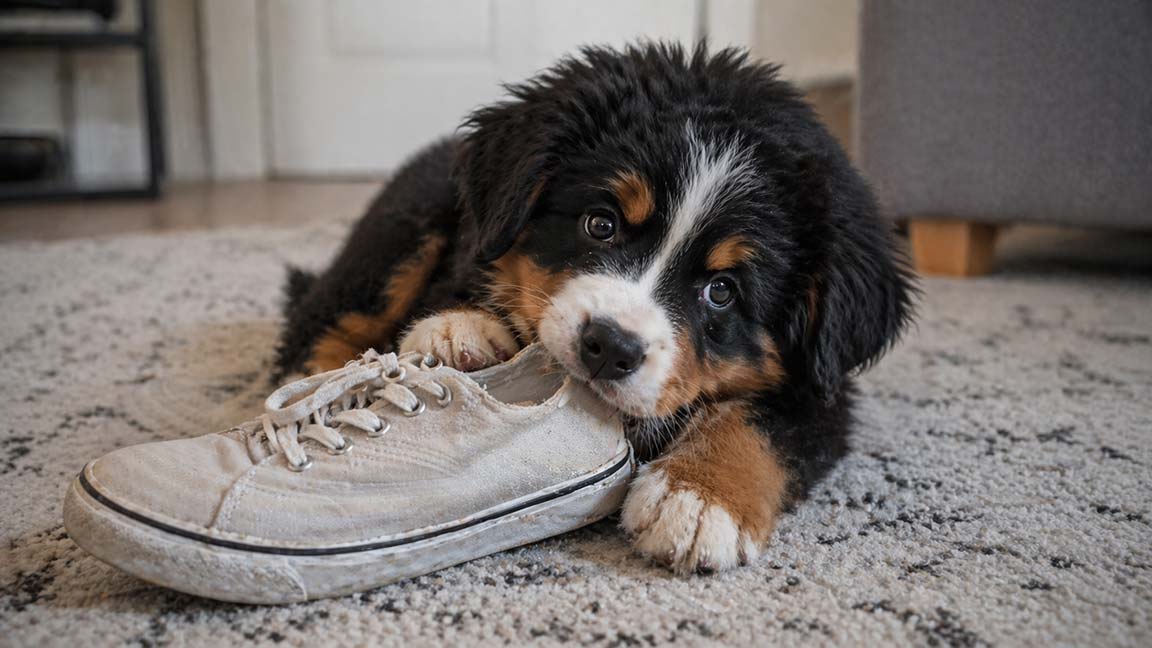
Stress in dogs is more common than most families realize, and it often shows up in subtle ways before it becomes a bigger problem. The good news is that once you know what to look for, you can step in early and help your dog feel safe, calm, and supported.
At Love Berners, we raise our tiny Bernedoodles and Mini Bernese Mountain Dogs with a strong focus on temperament, early socialization, and emotional balance. A calm, confident dog doesn’t happen by accident. It’s built through thoughtful breeding, gentle guidance, and understanding what your dog is trying to tell you.

What Causes Stress in Dogs?
Dogs experience stress for many of the same reasons we do, just without the words to explain it.
Common triggers of stress in dogs include:
• New environments or sudden changes
• Loud noises like thunderstorms or fireworks
• Separation from their family
• Overstimulation from too much activity
• Lack of routine or structure
• Unfamiliar people or animals
Even positive experiences, like visitors or outings, can become overwhelming if a dog doesn’t have time to process them.
Early Signs of Stress in Dogs
Before a dog becomes visibly anxious, there are small signals that often go unnoticed.
Watch for:
• Lip licking when no food is present
• Yawning outside of being tired
• Turning their head away or avoiding eye contact
• Slow movements or hesitation
• Sudden scratching or sniffing
These are early indicators of stress in dogs, and catching them at this stage makes a big difference.
More Obvious Signs of Stress in Dogs
As stress builds, the signs become harder to miss.
You may notice:
• Pacing or restlessness
• Whining or barking more than usual
• Excessive panting
• Destructive behavior
• Hiding or withdrawing
• Loss of appetite
At this point, your dog isn’t just uncomfortable. They’re struggling to cope.

Why Some Dogs Are More Sensitive
Not all dogs respond to stress the same way.
At Love Berners, we place a strong emphasis on breeding for stable, family-friendly temperaments. But even with the best foundation, each dog has their own personality.
Factors that influence stress in dogs include:
• Genetics and temperament
• Early life experiences
• Socialization during puppyhood
• Environment and daily routine
Understanding your dog as an individual is key to helping them.
How to Help a Stressed Dog Relax
When you notice signs of stress in dogs, your goal is not to “fix” the behavior instantly. It’s to create a sense of safety.
Create a Calm Environment
Start by reducing stimulation.
- Lower noise levels
- Limit activity around your dog
- Provide a quiet space where they can retreat
Sometimes the best thing you can do is simply slow things down.
Stick to a Routine
Dogs feel more secure when life is predictable.
- Feed at consistent times
- Keep walks and activities structured
- Maintain a steady daily rhythm
Routine brings clarity, and clarity reduces stress.
Give Them a Safe Space
A crate, bed, or designated area can become a comfort zone.
This should never feel like punishment. It should feel like a place where your dog can relax without pressure.

Use Gentle Reassurance
Stay calm yourself.
- Speak softly
- Move slowly
- Avoid overwhelming physical contact
Dogs pick up on your energy. If you stay steady, they are more likely to follow.
Provide Mental Enrichment
Sometimes stress in dogs comes from pent-up energy or a lack of stimulation.
Try:
• Puzzle toys
• Sniffing games
• Short training sessions
Mental work can be just as calming as physical exercise.
What Not to Do
It’s just as important to know what can make things worse.
Avoid:
• Punishing stress-related behavior
• Forcing your dog into uncomfortable situations
• Ignoring early warning signs
• Overloading them with stimulation
These approaches can increase stress in dogs and damage trust.
The Role of Early Socialization
At Love Berners, we introduce our puppies to a variety of gentle experiences early in life. This helps them grow into adaptable, confident companions.
Early socialization plays a major role in how dogs handle stress later on. Puppies who are thoughtfully exposed to new sights, sounds, and situations tend to recover more quickly and stay balanced in new environments.
When to Seek Extra Support
If your dog’s stress seems intense or ongoing, it’s worth getting additional guidance.
Signs you may need help include:
• Persistent anxiety
• Aggression linked to fear
• Inability to settle even in calm environments
A professional trainer or veterinarian can help identify deeper causes of stress in dogs and guide you toward the right solution.
A Final Thought from Love Berners
Every dog communicates, just not in words. When you learn to recognize stress in dogs, you give your companion something incredibly important: understanding.
At Love Berners, we believe that calm, confident dogs are created through thoughtful beginnings and supportive homes. When you respond with patience, structure, and care, your dog learns that the world is a safe place.
And that’s where true relaxation begins.
FAQ
What are the first signs of stress in dogs?
Early signs include lip licking, yawning, avoiding eye contact, and subtle changes in behavior.
What causes stress in dogs the most?
Common causes include changes in routine, loud noises, separation, and overstimulation.
How can I calm my dog down quickly?
Create a quiet environment, speak calmly, and guide them to a safe, familiar space.
Can stress in dogs lead to behavior problems?
Yes, ongoing stress can lead to barking, chewing, or withdrawal if not addressed.
Is stress in dogs normal?
Some stress is normal, but frequent or intense stress should be managed and supported.
Does early socialization reduce stress in dogs?
Yes, proper early socialization helps dogs become more confident and adaptable over time.