
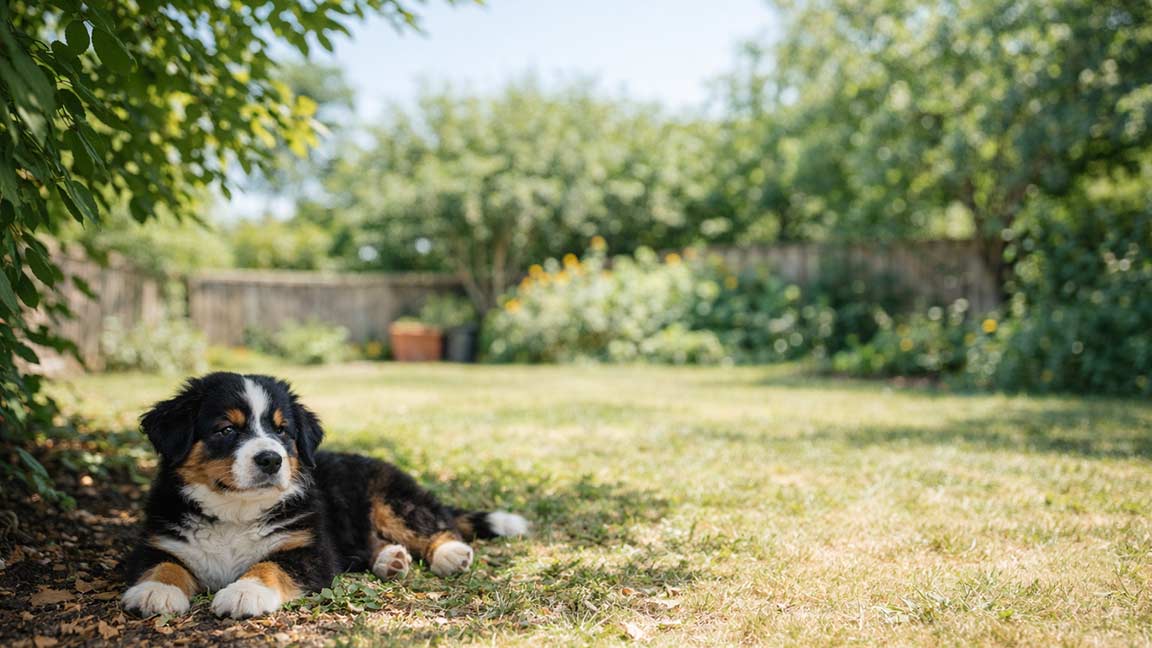
Dog heat safety is essential for every responsible dog owner, especially during the warm summer months. Puppies and young dogs can overheat much faster than adult dogs, and high temperatures can quickly become dangerous. Understanding dog heat safety helps families prevent heat exhaustion, avoid heatstroke, and keep their puppy comfortable during outdoor activities.
At Love Berners, puppies are raised to be active companions that enjoy outdoor adventures with their families. Our tiny Bernedoodles and mini Bernese Mountain dogs love to play and explore, but their thick coats mean dog heat safety is especially important when temperatures rise.
Learning how to protect your puppy in hot weather ensures they stay safe while still enjoying the fun parts of summer.
Why Dog Heat Safety Matters
Dogs do not cool down the same way humans do. Humans sweat through their skin, but dogs mainly regulate body temperature by panting.
When temperatures climb, dogs may struggle to release heat fast enough. This is why dog heat safety is critical during hot days.
Puppies are particularly vulnerable because:
- Their bodies are still developing
- They have less experience regulating activity in the heat
- They can become dehydrated more quickly
A lack of dog heat safety awareness can lead to serious conditions like heat exhaustion or heatstroke.
Signs Your Puppy Is Overheating
Recognizing early warning signs is one of the most important parts of dog heat safety.
Watch for these symptoms during warm weather:
- Heavy or rapid panting
- Excessive drooling
- Lethargy or weakness
- Bright red gums
- Vomiting or diarrhea
- Unsteady walking
If a puppy begins showing these symptoms, cooling them down immediately and contacting a veterinarian may be necessary.
Early action can prevent a mild overheating episode from becoming a dangerous medical emergency.
Best Outdoor Times for Dog Heat Safety
One of the easiest dog heat safety strategies is choosing the right time of day for walks and outdoor play.
Hot pavement and intense sun can quickly make outdoor activity uncomfortable for puppies.
Safer times include:
- Early morning walks
- Evening play sessions after the sun sets
- Short outdoor breaks instead of long activity periods
Midday sun is typically the hottest part of the day and should be avoided whenever possible.
A simple rule many dog owners follow is the pavement test. If the pavement feels too hot for your hand, it is too hot for your puppy’s paws.
Hydration Is Essential

Water plays a huge role in dog heat safety.
Puppies lose fluids quickly when they pant, especially during active play. Dehydration increases the risk of overheating.
Helpful hydration habits include:
- Providing fresh water at all times
- Bringing portable water on walks
- Offering water breaks during playtime
- Keeping water bowls in shaded areas outdoors
Some families even freeze small dog safe treats or ice cubes to give their puppy a cooling snack.
Proper hydration helps support healthy temperature regulation.
Shade and Cooling Areas
Providing shade is another key part of dog heat safety.
Direct sunlight can raise a dog’s body temperature quickly, especially during longer outdoor activities.
Helpful cooling options include:
- Covered patios or shaded yards
- Trees or outdoor umbrellas
- Cooling mats designed for dogs
- Indoor rest breaks during playtime
Even active dogs benefit from regular cooling breaks.
At Love Berners, puppies are raised in environments where they can rest comfortably and avoid prolonged exposure to heat.
Never Leave a Dog in a Hot Car
One of the most important dog heat safety rules is never leaving a dog in a parked car.
Even when outdoor temperatures feel moderate, a car can heat up extremely fast.
Within minutes:
- Temperatures inside a car can exceed 100°F
- Air circulation becomes limited
- Dogs may develop heatstroke quickly
Cracking a window does not provide enough protection.
If you are running errands during warm weather, it is always safest to leave your puppy at home in a cool environment.
Grooming and Coat Care
 Bernedoodles and Bernese mixes have thick coats that help protect them in both cold and warm climates. Proper grooming helps maintain airflow through the coat, which supports dog heat safety.
Regular brushing helps:
- Remove excess undercoat
- Improve airflow to the skin
- Reduce matting that traps heat
However, completely shaving certain breeds is not always recommended. A dog’s coat can also help regulate temperature and protect the skin from sun exposure.
Professional grooming guidance can help families find the right balance for their dog.
Fun Ways to Keep Dogs Cool
Dog heat safety does not mean dogs cannot enjoy summer activities. It simply means adjusting the environment to keep them comfortable.
Fun cooling ideas include:
- Kiddie pools for supervised splash time
- Frozen dog treats
- Sprinkler play in the yard
- Indoor enrichment games during peak heat
Water-based play can be especially enjoyable for energetic breeds like Bernedoodles.
These activities allow puppies to burn energy while staying cool.
Special Considerations for Puppies
Young dogs require extra attention when it comes to dog heat safety.
Because puppies are curious and playful, they may continue running even when they are overheating.
Owners should monitor:
- Playtime duration
- Outdoor temperatures
- Signs of fatigue
Frequent rest breaks help puppies avoid overexertion in warm conditions.
Responsible supervision ensures outdoor fun remains safe.
Building Safe Summer Habits
Dog heat safety becomes much easier when it becomes part of an everyday routine.
Simple habits can make a big difference:
- Check the weather before long walks
- Keep fresh water available
- Provide shaded resting areas
- Plan activities during cooler hours
Families who practice good dog heat safety help their dogs stay healthy and comfortable year-round.
At Love Berners, the goal is to help every puppy grow into a happy, healthy family companion. Teaching families about dog heat safety is one more way responsible breeders support long term puppy wellness.
FAQ
What temperature is too hot for dogs?
Many dogs begin to struggle when temperatures rise above 85°F, especially with high humidity. Dog heat safety becomes increasingly important as temperatures climb.
How can I tell if my dog is overheating?
Signs of overheating include heavy panting, drooling, weakness, vomiting, and bright red gums. Immediate cooling and veterinary attention may be necessary.
Are Bernedoodles sensitive to heat?
Bernedoodles can tolerate warm weather but their thick coats mean dog heat safety is important. Proper grooming, shade, and hydration help them stay comfortable.
Is it safe to walk a dog on hot pavement?
Hot pavement can burn a dog’s paw pads. A good dog heat safety test is placing your hand on the pavement for several seconds. If it feels too hot for your hand, it is too hot for your dog.
How can I keep my dog cool during summer?
Providing shade, fresh water, indoor breaks, and fun water activities like sprinklers or pools are great ways to support dog heat safety during warm weather.
Can dogs get heatstroke quickly?
Yes. Dogs can develop heatstroke in a short period of time if they are exposed to high temperatures without shade, water, or rest. This is why dog heat safety awareness is so important during hot weather.