
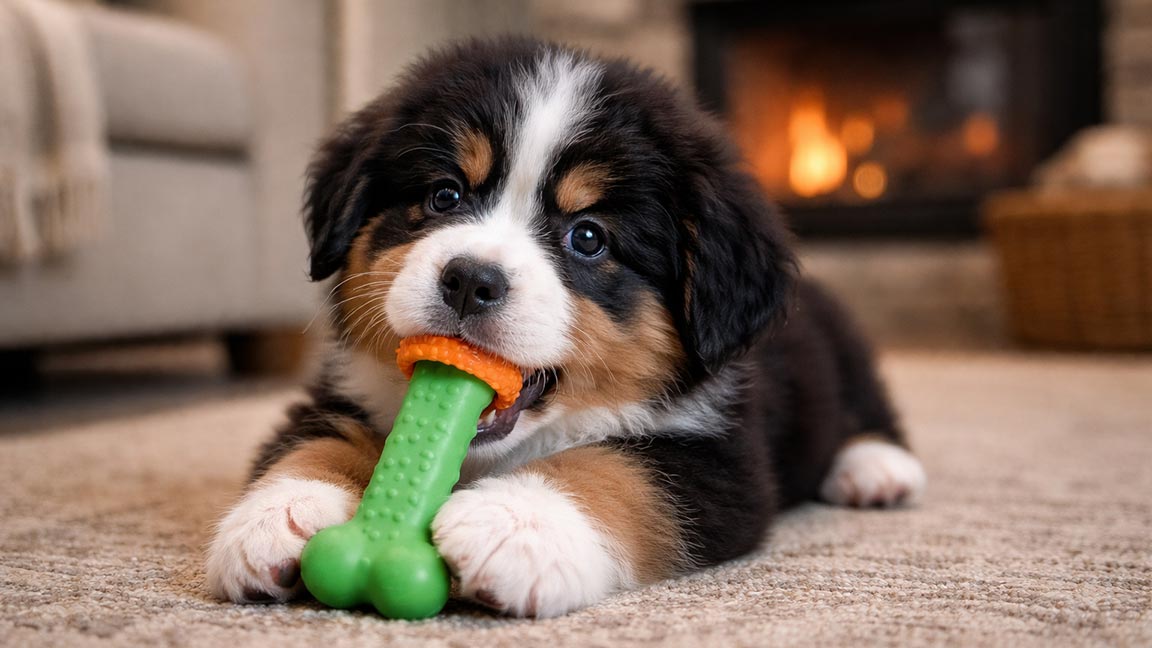
If you are dealing with puppy biting, you are not alone. Every puppy goes through a mouthing phase as they learn how to interact with the world, explore textures, and figure out what is okay to chew. The good news is that puppy biting is normal and completely fixable when handled properly. With patience, consistency, and the right techniques, you can teach your puppy gentle manners while protecting your hands, clothing, and sanity.
Why Puppy Biting Happens
Puppies do not use their paws to explore the way we use our hands. Their mouths are their main tool. During the teething months, chewing also helps soothe sore gums. Add excitement, frustration, or curiosity, and puppy biting becomes a quick way to express emotions they don’t yet know how to manage.
At Love Berners, we see this often in Mini Bernese Mountain Dogs and Tiny Bernedoodles. These puppies are intelligent, social, and eager to connect, which means they sometimes nip during play or during big bursts of enthusiasm. The goal isn’t to punish the behavior but to guide it.
The Importance of Bite Inhibition
Teaching bite inhibition means helping your puppy understand how much pressure is acceptable. In a litter, their siblings naturally teach it to them. A hard bite leads to a yelp and the end of play. When your puppy comes home, you continue this lesson in a consistent, gentle way.

What healthy bite inhibition looks like
- A puppy who tries to nibble lightly instead of biting hard.
- A puppy who stops when you say no or disengages.
- A puppy who becomes more controlled as they grow.
Good bite inhibition is the foundation of safe and polite adult behavior, so it is worth investing time in now.
How to Reduce Puppy Biting the Right Way
Redirect the behavior
Always give your puppy something appropriate to chew. Teething toys, rubber rings, frozen washcloths, or soft chew bones work well. When puppy biting happens, calmly swap your hands or clothing for the toy.
Pause the interaction
If the puppy gets too excited or nips too hard, stop the game immediately. Stand up, turn away, or walk a few steps. No yelling. No grabbing the muzzle. Just end the fun. Puppies quickly learn that biting makes the play stop.

Reward calm behavior
When your puppy settles, licks gently, or shows soft-mouth behavior, reward it. This teaches them that calm actions earn attention.
Avoid rough play
Wrestling or letting the puppy mouth your hands encourages more biting later. Stick to structured games like fetch or tug with clear rules.
Provide enough enrichment
Many biting issues show up when puppies are bored. Mental enrichment helps reduce frustration and overstimulation. Snuffle mats, food puzzles, short training sessions, and gentle problem-solving games all help reduce excess energy that often leads to nipping.
Watch for overstimulation
Sometimes puppies bite because they are simply done. Young dogs tire easily. Nipping during the evening is extremely common, often called the witching hour. A nap or quiet time fixes more biting than most people realize.
How Love Berners Puppies Communicate Through Biting
Mini Bernese Mountain Dogs tend to nip less aggressively because of their naturally gentle nature, but they still mouth during teething. Tiny Bernedoodles are playful and expressive, which means they sometimes use their mouths to get attention. Both breeds thrive with structure and calm redirection. Because they are people-oriented and eager to please, they respond quickly to positive reinforcement and predictable routines.
At Love Berners, early socialization helps puppies understand acceptable interactions before they ever go home. That said, every puppy goes through a learning curve, and consistent training at home is what creates long-lasting habits.
What Not to Do When Correcting Puppy Biting
Do not yell
This scares puppies and breaks trust. Fear does not teach good behavior.
Do not hold the muzzle shut
This is confusing, intimidating, and teaches nothing useful.
Do not use physical corrections
Anything painful or forceful damages the relationship and can create more fear-based behaviors later.
Do not expect overnight results
Teething lasts several weeks. Improvement comes steadily with consistency.
Gentle Training Techniques That Actually Work

Structured tug with rules
Let your puppy tug, but teach them to release when asked. This improves impulse control and teaches them how to engage without using their teeth on your skin.
Teach alternative behaviors
Ask for a sit-down or touch cue when excitement starts to spike. Puppies cannot sit politely and bite at the same time.
Use short training windows
Two to three-minute sessions are enough for young puppies. Ending before they get overstimulated helps prevent biting.
Keep a toy in every room
If your puppy starts mouthing, you can redirect instantly without scrambling to find a chew.
When Puppy Biting Signals Something Else
Sometimes puppy biting is more than teething or play behavior.
It may be a sign of:
- Lack of rest
- Over excitement
- Frustration from too much stimulation
- Needing clearer boundaries
- Needing more appropriate chewing options
If your puppy seems overwhelmed, cranky, or hyper, try adjusting sleep time, shortening play sessions, or adding structured enrichment. Most biting problems improve significantly with small lifestyle adjustments.
A Smoother Puppyhood Starts With Understanding
Puppy biting does not mean your dog is aggressive or difficult. It means they are young, learning, and trying to communicate. When you respond consistently, calmly, and with clear direction, they grow out of the nipping phase beautifully.
Mini Bernese Mountain Dogs and Tiny Bernedoodles from Love Berners are naturally gentle, people-centered puppies who respond especially well to patient training. With the right guidance, they become polite, affectionate companions who understand how to interact kindly with every family member.

FAQs
Why does my puppy bite more in the evening?
Puppies often get overtired in the evening, which leads to crankiness and increased biting. A nap usually helps.
Should I yelp when my puppy bites?
A soft yelp can work for some puppies, but many become more excited. If your puppy gets more wound up, simply stand up and stop the game.
How long does the puppy biting phase last?
Most puppies improve significantly between three and six months, but consistency matters more than age.
Why does my puppy bite during petting?
They may be overstimulated or unfamiliar with touch. Slow the interaction and reward calm behavior.
Do Mini Bernese Mountain Dogs or Tiny Bernedoodles bite more?
Both breeds go through normal puppy biting, but their gentle temperaments make training easier when handled correctly.