Understanding dog body language is one of the most valuable skills you can develop as a puppy owner. When you can read the small signals your puppy sends through posture, movement, and expression, you respond faster, prevent misunderstandings, and build a stronger bond. So what is your puppy really saying? Learning to interpret dog body language gives you the clearest answers.
Why Dog Body Language Matters
Puppies rely on physical communication long before they understand verbal cues. Every ear twitch, tail shift, and lip movement is information. When you understand these signals, you avoid unnecessary stress and help your puppy feel supported and safe. This is especially important during the early socialization months when puppies are forming lifelong emotional patterns.
Calm and Relaxed Signals
A puppy who feels safe shows it. A loose, wiggly body, a soft face, and a gentle tail wag at mid height usually mean the puppy is content and comfortable. You might also see:

Relaxed posture
The puppy’s weight sinks into their body rather than leaning forward or back. Their mouth may stay slightly open. Eyes remain soft and round.
Gentle tail movement
Not the frantic helicopter spin, but an easy sway that matches an easy mood.
Slow blinking
Dogs often blink softly when they trust the environment and want to avoid tension.
These relaxed signs are your green light that your puppy is at ease and ready to connect.
Excitement and Anticipation Signals
Puppies are enthusiastic by nature. Dog body language shifts quickly when something exciting happens.
Upright posture
The puppy leans forward, eyes alert and ears perked, ready to interact.
Quick tail wagging
Fast, loose movement shows excitement, but the rest of the body should still look happy rather than tense.
Play bows
A classic signal where the chest drops and the rear pops up. This is an invitation to have fun.
Play bows are especially common in puppies and indicate that your dog is feeling joyful and open to interaction.
Stress and Uncertainty Signals
Your puppy will also communicate when they feel unsure. Recognizing these early helps you prevent fear from escalating.
Tucked tail
A lowered or tucked tail is a clear sign of discomfort or insecurity.
Lip licking
Quick, repeated tongue flicks outside mealtimes indicate mild stress.
Turning their head away
A puppy will often look away from something that feels overwhelming.
Yawning
A stress yawn is not about tiredness. It signals tension or unease.
You never scold a puppy for stress signals. These are whispers for help. Giving space, slowing things down, or offering gentle encouragement helps the puppy regain confidence.
Fear or Overwhelm Signals
Some signals indicate the puppy feels too pressured or unsafe.
Full body freeze
A still body often means the puppy is trying to assess the situation before reacting.
Whale eye
When the whites of the eyes show, the dog is anxious and unsure.
Backing away
A clear request for distance. Forcing interaction at this stage damages trust.
These signs mean it is time to step back and rethink the situation. Your goal is to help the puppy feel safe again before moving forward.
How Mini Bernese Mountain Dogs and Tiny Bernedoodles Communicate
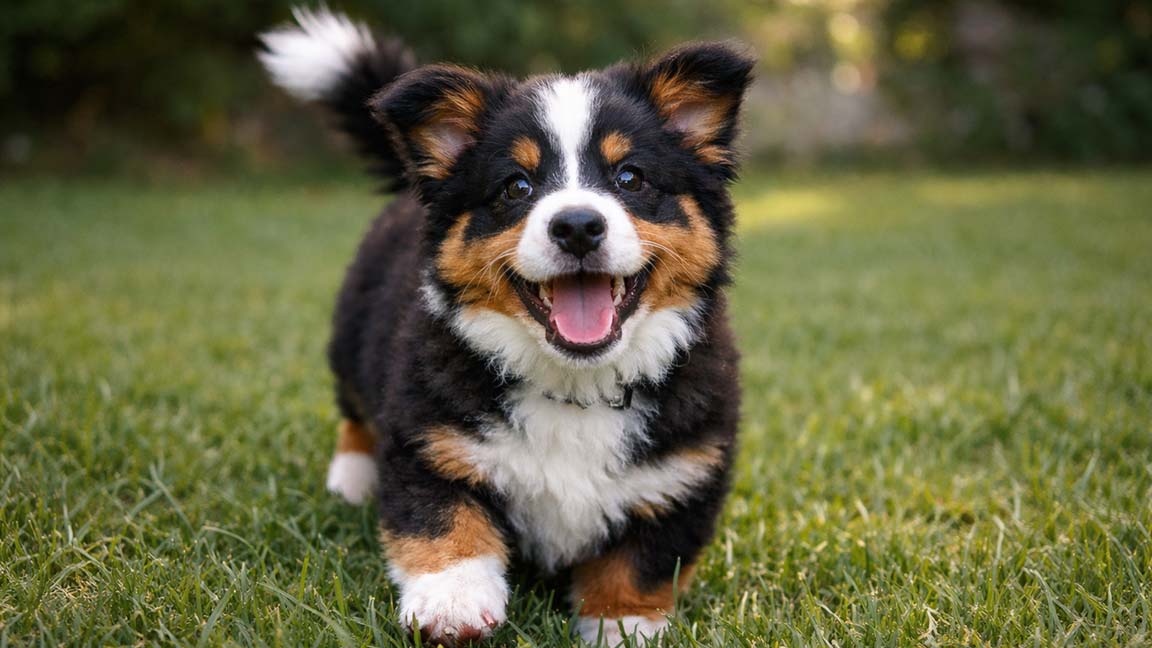
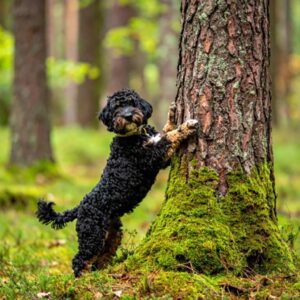 Love Berners puppies are well known for their gentle, people-oriented personalities, which makes reading their body language especially intuitive. Mini Bernese Mountain Dogs tend to be expressive, affectionate, and honest about their feelings. When happy, they melt into your lap, wag their tails slowly at mid height, and nuzzle for attention. Tiny Bernedoodles bring a bouncy, playful twist to their communication. They use big, silly play bows, full body wiggles, and soft eye contact to invite connection.
Because these breeds are so tuned in to their families, they respond quickly to your emotional cues. Understanding dog body language helps you support their confidence and maintain that warm, trusting relationship they naturally seek.
How to Respond to Your Puppy’s Signals
When the puppy is relaxed
Engage, reward, and keep the interaction positive. This is the perfect time for training and bonding.
When the puppy is excited
Channel that energy. Short training sessions, structured play, or enrichment activities prevent overstimulation.
When the puppy is stressed
Take a breath and slow down. Reduce pressure, remove triggers if possible, and offer calm reassurance without crowding the puppy.
When the puppy is fearful
Give space first. Let the puppy choose when to approach. Pair the environment with gentle rewards to help them regain confidence at their own pace.
Your puppy is always communicating. The better you understand the signals, the smoother your training, socialization, and daily routines become.
Building Trust Through Better Communication
Puppies thrive when they feel understood. The moment you start interpreting dog body language accurately, everything improves. Training becomes easier. Socialization feels natural. Your puppy learns they can count on you to listen, even when they cannot speak.
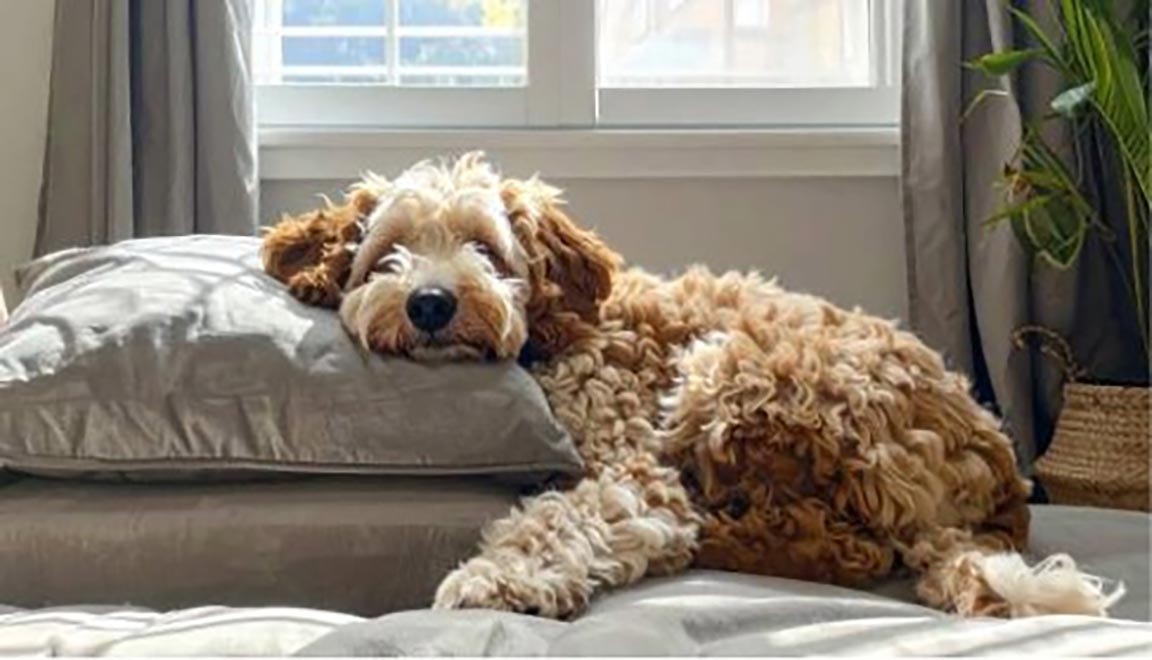
For families welcoming a Mini Bernese Mountain Dog or Tiny Bernedoodle from Love Berners, this understanding sets the foundation for a lifetime of trust. These dogs are deeply connected to their people, and being able to read their body signals strengthens that bond from the very first day.
FAQs
How do I know my puppy trusts me?
Look for loose body posture, soft eyes, gentle tail movement, and a willingness to stay near you even without treats or cues.
Why does my puppy lick their lips when meeting new people?
Lip licking often signals mild uncertainty. Slow introductions and giving the puppy space help it adjust.
What does it mean when a puppy freezes during play?
A freeze usually means the puppy feels overwhelmed. Pause the activity and let them reset.
Why does my puppy look away when I talk to them?
Turning the head away is a calming signal. It helps reduce tension and shows the puppy is trying to stay comfortable.
Is tail wagging always a sign of happiness?
Not always. Tail position and body posture matter. A loose, mid height wag usually signals friendliness, while a stiff or low wag can show stress or caution.