

Puppy teething is one of the most universal challenges new dog owners face, yet it is also one of the most misunderstood. At Love Berners, we have raised many litters over the years and guided countless families through the ups and downs of puppy teething. When you understand what is happening in your puppy’s mouth, you can support them with confidence instead of frustration. The goal is simple. Help your puppy feel comfortable, protect your home, and establish healthy chewing habits that last long after teething.
Puppy teething occurs in stages, and each stage includes typical behaviors that can appear dramatic if you have not been through it before. Those tiny needle teeth, the urge to chew everything in sight, and the moments of fussiness are all part of a natural developmental process. As experienced breeders, we watch puppies grow through these phases every day, and we know firsthand how much comfort, guidance, and structure can help.
Understanding the Puppy Teething Timeline
Puppy teething begins earlier than most families expect. The full process lasts several months, and knowing what to expect makes the transition smoother for everyone.

Stage one
Around three weeks old, your puppy’s baby teeth begin to erupt. Puppies remain with their mother and littermates during this phase, exploring with their mouths as they learn to play, interact, and regulate their biting. At Love Berners, we gently encourage appropriate play and provide age-appropriate toys to help puppies experiment safely.
Stage two
Around eight to twelve weeks, puppies begin using their baby teeth more actively. This is usually when families bring their puppies home. The world is new, their environment changes, and their little mouths are sensitive. Many puppies begin to chew to relieve pressure. This is when the puppy’s teething phase is most noticeable at home.
Stage three
Around four to six months, puppies begin to lose their baby teeth as their adult teeth emerge. This is the most intense stage of puppy teething and often the most challenging for families. You may find tiny teeth on the floor, see more drooling, or notice your puppy chewing with more determination than usual. All of this is normal.
Stage four
By six to eight months, most adult teeth have erupted. The puppy teething phase tapers off as the mouth becomes more comfortable. Dogs continue to chew, but the intensity decreases.
Understanding these stages helps you respond with patience and consistency, which is exactly what your puppy needs from you.
How Puppy Teething Feels for Your Dog
Puppy teething is uncomfortable. As adult teeth push through, the gums swell, itch, and sometimes ache. Puppies chew instinctively because chewing naturally relieves that pressure. As breeders, we watch this every day in the whelping box and later in the play area. When puppies have appropriate outlets, their teething experience is easier and their behavior improves noticeably.

Common puppy teething symptoms include:
- Drooling
- Chewing on hands or clothing
- Slight fussiness
- Increased mouthing during play
- Red or swollen gums
- Mild loss of appetite during intense moments
These symptoms are normal. Your role is to guide their chewing in a healthy direction while protecting fingers, furniture, and the puppy’s developing confidence.
Safe Chewing Options for Puppy Teething
The best support you can offer is providing safe, appropriate items for chewing. Every puppy has preferences, so variety matters.
Soft teething toys
Puppies often prefer soft rubber toys during early puppy teething stages when gums are most sensitive.
Cold or frozen toys
Frozen washcloths or safe, chilled toys can reduce swelling and provide soothing comfort.
Puppy-sized chew bones
Choose age-appropriate chews designed for puppies to protect their developing teeth.
Lick mats and slow feeders
Licking is calming and helps shift focus away from teething discomfort.
As experienced breeders, we always remind families that supervision is essential. Puppies explore quickly, and you want to make sure every chew session stays safe and positive.
What Not to Do During Puppy Teething
A few common mistakes make the puppy teething phase harder than it needs to be:
- Do not encourage tug-of-war with baby teeth
- Avoid hard chews not designed for puppies.
- Do not allow chewing on shoes or household items you want to protect.
- Avoid scolding your puppy for chewing, since chewing is normal and instinctive.
Your puppy is not being naughty. They are navigating a normal developmental milestone, and you are their guide.
Building Good Chewing Habits for Life

One of the best parts of supporting puppy teething correctly is that you help establish lifelong chewing patterns. When families stay consistent, puppies learn exactly what is appropriate to put in their mouths. At Love Berners, we begin this training early so our puppies already understand the basics by the time they go home.
Healthy chewing habits offer lifelong benefits:
- Improved dental health
- Better stress relief
- Stronger independence skills
- Calmer behavior during quiet times
Puppy teething is temporary, but the lessons learned during this stage last for years.
When to Contact a Veterinarian
Most puppy teething issues resolve naturally, but there are a few signs worth mentioning to your veterinarian.
Watch for:
- Persistent bad breath
- Baby teeth that do not fall out
- Excessive bleeding from the gums
- Difficulty eating or drinking
These issues are uncommon, but puppies grow quickly, and addressing concerns early helps prevent long-term dental challenges.
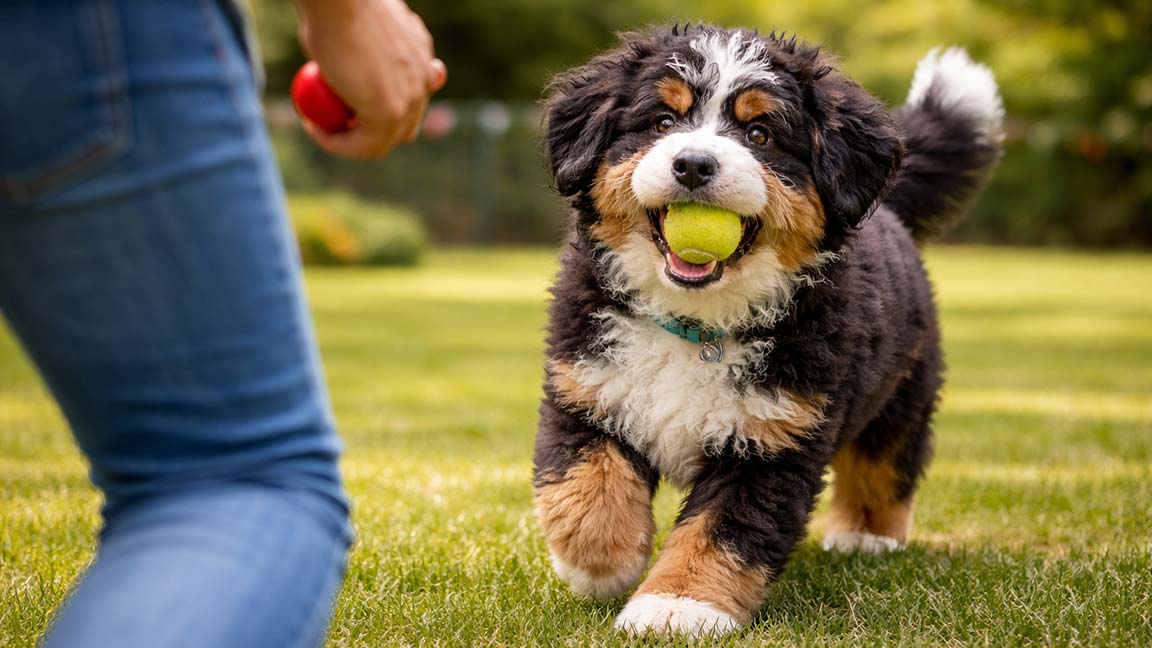
Helping Your Puppy Feel Safe and Supported
At Love Berners, we focus on the emotional well-being of every puppy just as much as their physical development. Puppy teething can be uncomfortable, but it does not need to be stressful. When families understand what their puppies are experiencing, they respond with gentle guidance, patience, and calm reassurance.
Your puppy’s confidence grows when you help them through each stage with kindness. From offering appropriate toys to redirecting biting consistently, every moment strengthens your bond and helps your puppy settle into their new home.
FAQ
When does puppy teething start?
It begins around three weeks old and becomes most noticeable after eight weeks.
How long does puppy teething last?
Most puppies complete puppy teething by six to eight months.
Is chewing normal during puppy teething?
Yes. Chewing relieves pressure from erupting teeth and helps soothe discomfort.
What should I give my puppy to chew on?
Safe puppy toys, chilled items, rubber chews, and lick mats are helpful options.
Should I correct my puppy for biting during puppy teething?
Redirect instead of scolding. Puppies bite from discomfort, not misbehavior.