
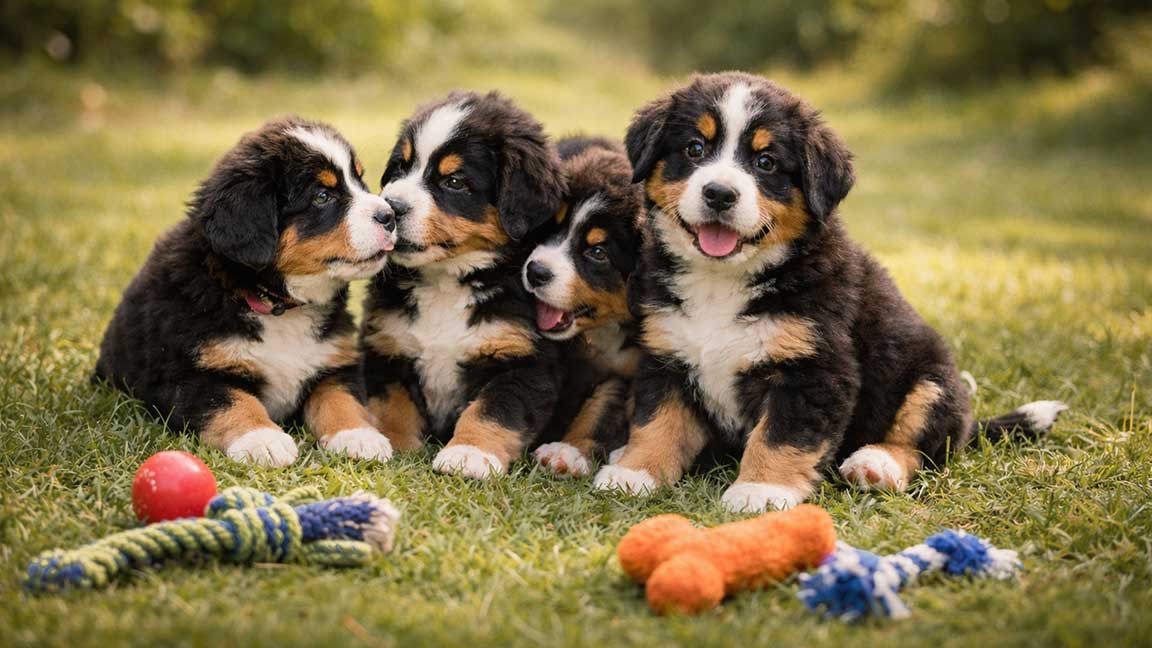
Puppy socialization shapes the entire future of your dog. It influences how confident they become, how they navigate the world, and how easily they settle into life with your family. At Love Berners, we take puppy socialization seriously because we have seen how much it matters for Bernedoodles, tiny Bernedoodles, and Mini Bernese Mountain Dogs. These breeds are loving, people-oriented, and eager to do the right thing. However, they still need intentional experiences early on to help them grow into well-adjusted companions that families dream of.
We begin puppy socialization from the moment they are born. Puppies are raised in our home, surrounded by everyday sounds, gentle handling, and real family life. By the time your puppy goes home, they already have the foundation for confidence, curiosity, and emotional resilience. From there, your role begins, and it is one of the most rewarding parts of raising a Bernedoodle or Mini Bernese Mountain Dog.
Why Puppy Socialization Matters

Puppy socialization helps your dog interpret the world without fear. When puppies are introduced to new sights, sounds, textures, people, and experiences during their early developmental window, they learn that the world is safe and interesting rather than overwhelming. Without proper puppy socialization, even gentle breeds like ours can develop uncertainty and hesitation simply because they were not given the right opportunities to learn.
For Bernedoodles and Mini Bernese Mountain Dogs, puppy socialization is especially important. These breeds are sensitive and tuned in to their families. They read emotions easily and want to stay close to their people. When that temperament is paired with strong socialization, they flourish into balanced, confident companions who adapt well to new environments and daily life.
How We Begin Puppy Socialization at Love Berners
Our program provides each puppy with a thoughtful start before they arrive at your home. Here are some of the experiences we build into their early weeks:
- Gentle handling every day helps puppies relax with human touch.
- Exposure to family life introduces natural household sounds like dishes, vacuuming, and laughter.
- Safe exploration allows puppies to move across different surfaces and interact with new toys.
- Short crate sessions lay the first bricks for smoother nighttime routines. Establishing potty routines helps them feel familiar with the rhythm as they transition into your home.
These early experiences matter. They set the tone for your own puppy socialization efforts once your Bernedoodle or Mini Bernese Mountain Dog is ready to begin meeting the wider world.
How to Continue Puppy Socialization at Home
Once your puppy comes home, your job is to continue building on the work we have already started. The goal is simple. Show your puppy as many safe, positive experiences as possible during their early months. Below are practical, easy ideas families can start right away.

Introduce your puppy to new people
Have your puppy meet gentle adults, supervised children, and visitors calmly. Go slow and let your puppy check things out at their own comfort level. These small moments help them learn that people are friendly and safe.
Explore new environments
Bring your puppy to different settings, such as quiet parks, garden centers, or friends’ homes. The goal is not excitement. It is exposure. Keep experiences short, positive, and steady. These early outings help your puppy learn that the world is big and interesting.
Pair new experiences with rewards
When your puppy sees a stroller, a wheelchair, a bicycle, or hears a new sound, offer a calm voice and a small treat. This creates positive associations and helps build confidence.
Encourage problem-solving
Simple puppy puzzles, cardboard boxes, and interactive toys teach your puppy to think and explore. This kind of mental challenge builds self-assurance and helps your puppy develop healthy independence.
Keep interactions positive
Puppy socialization is not about overwhelming your Bernedoodle or Mini Bernese Mountain Dog. It is about gradually expanding their comfort zone with reassurance and guidance. Do not force any interaction. Let your puppy observe, approach, or step back as needed.

Common Puppy Socialization Mistakes
Even with the best intentions, families can accidentally confuse or overwhelm their puppy. Here are the most common missteps to avoid:
- Overexposing the puppy in busy spaces before they are ready
- Allowing rough or unpredictable interactions with other dogs
- Forcing the puppy into situations that cause them to shut down
- Moving too fast without letting the puppy process new things
The safest approach is always steady, thoughtful progress. Confidence grows from calm repetition, not chaos.
Puppy Socialization and Long-Term Behavior
Many behavioral challenges in adulthood can be traced back to the absence of early socialization. Dogs that do not learn about the world during their puppy socialization window may grow into adults that are hesitant, vocal, or anxious in unfamiliar situations. The good news is that with our early program and your continued work at home, you give your puppy a powerful advantage for life.
Because our puppies begin socialization from day one, they enter your home already used to human touch, new environments, and early structure. When families continue puppy socialization with the same steady, nurturing approach, they often notice how quickly their puppy settles into new routines and bonds with everyone in the home.
Creating a Confident Bernedoodle or Mini Bernese Mountain Dog
Puppy socialization is the heart of raising a trustworthy, well-balanced dog. It creates the foundation for all future training and helps prevent fear-based behaviors. Most importantly, it builds a deep level of trust between you and your puppy. When your Bernedoodle or Mini Bernese Mountain Dog knows they are safe and supported, they approach the world with curiosity instead of worry.
At Love Berners, our goal is to give your puppy the best possible emotional start. We combine early handling, thoughtful exposure, and positive experiences so your puppy enters your home ready to grow and thrive. With your continued support and everyday experiences, your dog becomes the confident and loving companion these breeds are known for.

FAQ
At what age should puppy socialization begin?
It starts from birth. Early experiences in the breeder’s home shape a puppy’s ability to cope with new situations later.
How long does the puppy socialization window last?
The most important period is between 3 and 16 weeks, though positive exposure should continue throughout life.
Can you socialize a puppy before it is fully vaccinated?
Yes, in safe environments. Avoid unknown dogs and public ground but continue controlled exposure at home and in safe places.
What if my puppy seems shy during puppy socialization?
Go slow and allow them to observe first. Many puppies gain confidence through gentle, repeated experiences.
Does puppy socialization affect training later?
Absolutely. Well-socialized puppies learn faster and respond better to new situations, commands, and routines.